You’ve just felt that sudden, sharp pull. Maybe it happened while lifting something at work, reaching for a suitcase, or during a workout. Now the muscle is tight, sore, and every movement reminds you it’s not happy.
Pulled muscles (also called muscle strains) are extremely common. The good news is that most of them respond very well to the right care — and chiropractic treatment is one of the most effective non-invasive options available.
In this guide you’ll learn exactly what a pulled muscle is, why it happens, the symptoms that matter, and how a chiropractor can help you heal faster and reduce the chance of it happening again.
Book a consultation and we’ll assess whether shockwave therapy is right for you.
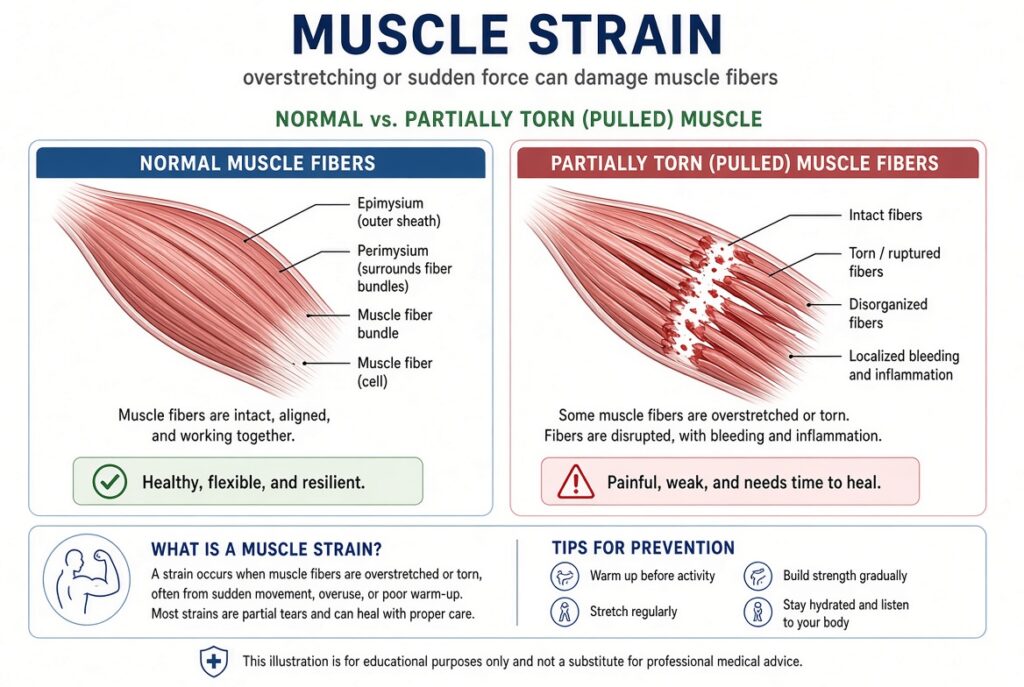
A pulled muscle occurs when the muscle fibers or the tendon that attaches the muscle to bone are overstretched or partially torn. Strains are graded by severity:
- Grade 1 – Mild overstretch with microscopic tearing. You feel discomfort but can still move.
- Grade 2 – Partial tear. More pain, swelling, and noticeable weakness.
- Grade 3 – Complete tear. Significant pain, bruising, and loss of function (these often need medical imaging and specialist care).
The most commonly pulled muscles are in the lower back, neck, hamstrings, shoulders, and calves.
Common Causes of Pulled Muscles
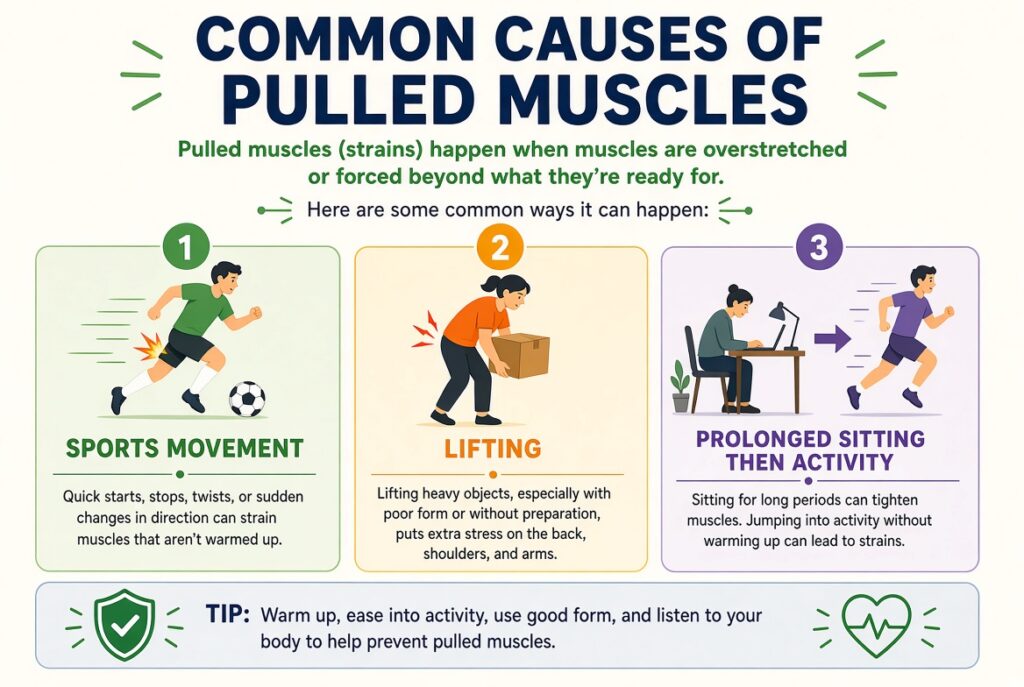
Muscles get strained when the force placed on them exceeds what they can handle in that moment. Typical triggers include:
- Sudden twisting, lifting, or jerking motions
- Sports that involve sprinting, jumping, or rapid direction changes
- Poor warm-up before activity
- Overuse from repetitive work or training
- Weak supporting muscles or poor posture
- Accidents (car collisions, slips, or falls)
- Fatigue — tired muscles are more vulnerable
People who sit for long periods and then suddenly become active are especially prone to these injuries.
Symptoms of a Pulled Muscle
You’ll usually notice:
- Sudden sharp pain at the moment of injury
- Tenderness when you touch the area
- Swelling or bruising (sometimes appearing a day later)
- Stiffness and reduced range of motion
- Muscle weakness or spasm
- Pain that worsens with specific movements
Red flags that need prompt evaluation: inability to bear weight, significant bruising and swelling, a “popping” sensation at the time of injury, or pain that radiates with numbness or tingling.
How a Chiropractor Helps with Pulled Muscles
Chiropractors are trained to treat both the joints and the soft tissues around them. For a pulled muscle they typically combine several approaches:
1. Accurate assessment They examine how the injury is affecting movement, check for joint restrictions, and identify contributing factors such as pelvic or spinal misalignment that may be overloading the muscle.
2. Soft tissue therapy Techniques such as myofascial release, trigger-point therapy, and active release help reduce muscle guarding, break up adhesions, improve blood flow, and decrease pain. This is often the first step when the muscle is in spasm.
3. Gentle joint adjustments When a muscle is strained, nearby joints often become restricted. Precise adjustments restore proper motion, which takes mechanical stress off the injured muscle and allows it to heal more efficiently.
4. Guided rehabilitation Once the acute pain settles, your chiropractor prescribes specific stretches and strengthening exercises. These restore flexibility and build resilience so the muscle is less likely to re-injure.
5. Recovery guidance You’ll receive clear advice on activity modification, ice/heat timing, and how to gradually return to normal movement without setbacks.
This combination addresses both the damaged muscle fibers and the movement patterns that contributed to the injury — something pain medication alone cannot do.
What to Expect During Treatment
Most people notice reduced pain and better mobility within a few visits. Mild (Grade 1) strains often improve significantly in 1–3 weeks with consistent care. Moderate strains typically take longer and benefit from a structured plan of soft tissue work plus progressive exercise.
Your chiropractor will also screen for any signs that the injury needs additional medical evaluation (imaging, for example) and will refer you when appropriate.
At-Home Support That Speeds Recovery
While professional care handles the deeper issues, these simple steps help:
- Follow the RICE principle early (Rest, Ice, Compression, Elevation) for the first 48–72 hours
- After the acute phase, gentle movement is better than complete rest
- Stay hydrated and eat enough protein to support tissue repair
- Avoid aggressive stretching while the area is still very sore
- Gradually reintroduce strength work under guidance
How to Prevent Future Pulls
- Warm up properly before activity
- Strengthen the muscles that support the area (core, glutes, and the opposing muscle groups)
- Improve posture and workstation ergonomics
- Listen to early warning signs of tightness or fatigue
- Address any recurring joint restrictions before they overload the muscles
When You Should See a Chiropractor
If the pain is limiting your daily activities, not improving after several days of basic care, or keeps returning in the same place, it’s time for a professional assessment. Early intervention usually leads to faster and more complete recovery.
Frequently Asked Questions
Can a chiropractor treat a pulled muscle or only the spine? Yes. Modern chiropractic care routinely includes soft tissue techniques specifically for muscle strains in addition to joint adjustments.
How soon after a pull should I go? For most mild-to-moderate strains, seeing a chiropractor within the first few days is ideal. Severe injuries with significant swelling or loss of function should be evaluated promptly.
Is it safe? When performed by a licensed chiropractor after proper assessment, the techniques used for muscle strains are considered very safe. Temporary soreness after treatment is possible but usually mild and short-lived.
Get Expert Help and Move Freely Again
A pulled muscle doesn’t have to sideline you for weeks. With the right combination of soft tissue work, precise adjustments, and smart rehabilitation, most people recover fully and return to the activities they enjoy with greater confidence.
At Cucci Chiropractic, Dr. Joseph Cucci and the team provide focused care for muscle strains and soft tissue injuries. Serving patients in New York and New Jersey, they combine gentle chiropractic adjustments, targeted soft tissue therapy, and personalized exercise guidance to help the body heal efficiently. If a pulled muscle is slowing you down, their patient-centered approach can help you regain strength, reduce pain, and prevent future injuries.
Don’t wait for the discomfort to become chronic. Reach out to Cucci Chiropractic and take the first step toward comfortable, confident movement.