Your feet are your body’s contact point with the ground.
Every time you stand, walk, run, or exercise, your feet help manage physical forces and adapt to the surface beneath you. When foot discomfort or an inefficient movement pattern begins affecting your daily activities, you may notice symptoms beyond the foot itself.
You may change the way you walk.
You may place more weight on one side.
You may avoid certain shoes.
Or you may stop participating in activities because standing or walking has become uncomfortable.
At Cucci Chiropractic, we want to understand how you move before recommending a solution.
For selected patients, we may recommend custom foot orthotics as part of an individualized care plan.
Custom orthotics are shoe inserts created according to information collected about your feet, movement, symptoms, and support needs. Unlike a standard store-bought insole, a custom orthotic is selected or fabricated using measurements and assessment findings specific to you.
We do not assume that everyone with foot pain needs an orthotic.
We evaluate you first.
If we believe custom orthotic support may be appropriate, we will explain what we found, why we are recommending it, and how the orthotic may fit into your overall care.
Book a consultation and we’ll assess whether custom foot orthotics is right for you.
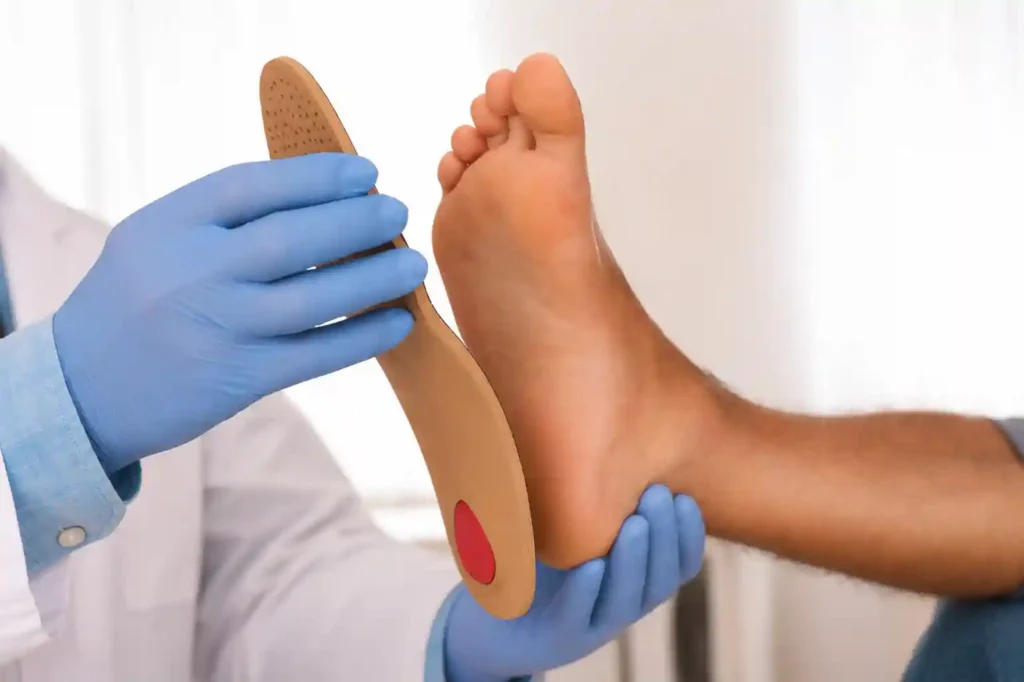
Custom foot orthotics are specialized inserts designed to fit inside your shoes and provide individualized support.
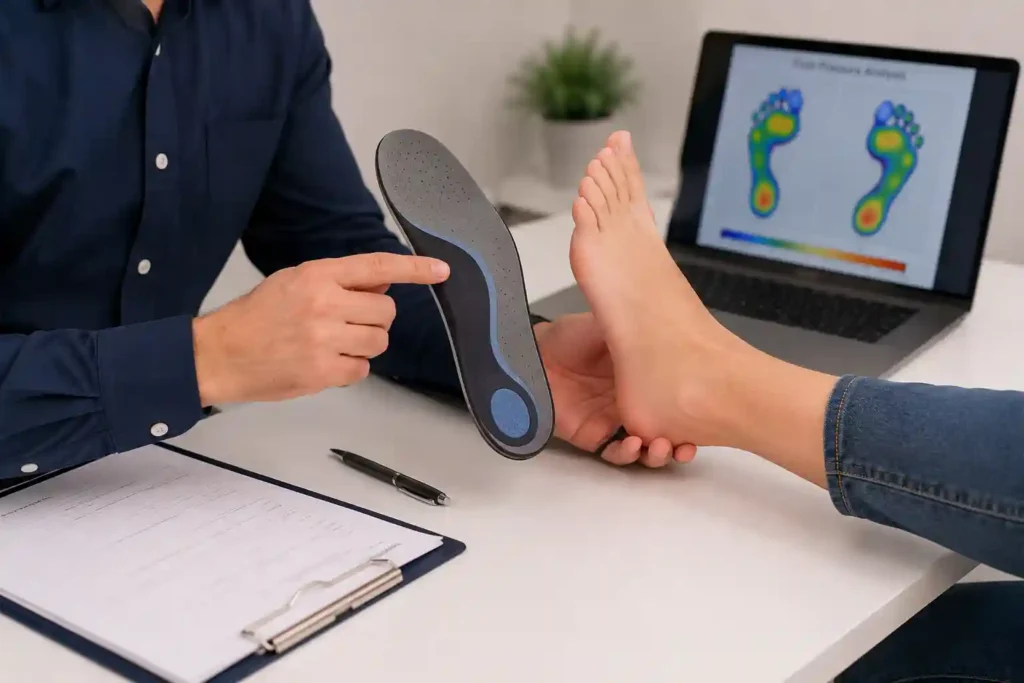
Depending on the orthotic system being used, information about your foot structure may be collected through digital scanning, foot impressions, measurements, or another assessment method.
We also consider how you stand and move.
An orthotic is not simply extra cushioning.
Depending on your individual needs, an orthotic may be designed to provide support to selected areas of the foot or influence how physical pressure is distributed while you stand and walk.
Custom orthotics can vary in:
- Shape
- Material
- Flexibility
- Rigidity
- Arch support
- Heel design
- Length
- Intended activity
- Footwear compatibility
The right orthotic depends on the person wearing it.
An athlete who runs regularly may have different support needs from someone who stands at work throughout the day.
That is why we do not recommend the same insert to every patient.
How Are Custom Orthotics Different From Store-Bought Insoles?
Walk into a pharmacy, sporting goods store, or shoe shop and you will find many types of insoles.
Some provide cushioning.
Others advertise arch support or additional heel comfort.
For people with mild, temporary discomfort, an over-the-counter insole may sometimes be reasonable to try.
However, these products are made to fit broad categories of feet and shoes.
A custom orthotic is different because our recommendation begins with an individualized evaluation.
We consider factors such as:
- Your symptoms
- Foot structure
- Standing posture
- Walking pattern
- Previous injuries
- Activity level
- Work demands
- Exercise
- Footwear
- Your goals
The purpose is not to claim that a custom device is automatically better for every person.
Our goal is to determine whether individualized support may be more appropriate for your specific concerns.
If we believe an over-the-counter option may be sufficient, we can discuss that honestly.
Do I Actually Need Custom Orthotics?
Not everyone needs custom orthotics.
Foot discomfort can have many causes.
Sometimes changing footwear or temporarily modifying an activity may help.
In other situations, persistent symptoms or movement findings may justify a more detailed evaluation.
You may want to consider an assessment if you experience:
- Persistent foot discomfort
- Recurring heel pain
- Arch discomfort
- Difficulty standing for long periods
- Symptoms that return during walking or exercise
- Uneven shoe wear
- Recurrent lower body discomfort
- A noticeable change in your walking pattern
- Difficulty finding comfortable footwear
- Symptoms that have not responded to basic support options
These signs do not automatically mean you need an orthotic.
They tell us that we should look more closely at how your feet and lower body are functioning.
We want to identify what may be contributing before recommending a device.
How We Evaluate Your Feet and Movement?
Your orthotic evaluation begins with a conversation.
We want to know when your symptoms began and how they affect your life.
We may ask:
- Where do you feel discomfort?
- When are symptoms most noticeable?
- What type of work do you do?
- How long do you stand each day?
- What sports or exercise do you participate in?
- Have you had previous foot, ankle, knee, or hip injuries?
- What shoes do you wear most often?
- Have you tried insoles before?
- What activities are you trying to return to?
Next, we evaluate relevant physical and movement findings.
Depending on your symptoms, we may look at:
- Foot position
- Arch characteristics
- Ankle mobility
- Weight distribution
- Standing posture
- Walking pattern
- Lower body alignment
- Hip and knee movement
- Shoe wear patterns
We may also use digital foot scanning when it is available and appropriate.
The technology gives us additional information, but the scan itself does not replace our evaluation.
We interpret the information in the context of your symptoms and movement.
What Is a Gait Assessment?
Gait is the way you walk.
Walking may appear simple, but it requires coordination between your feet, ankles, knees, hips, pelvis, and trunk.
When one area is uncomfortable, you may unconsciously change the way you walk.
You may shorten one step.
You may shift your weight quickly from one foot.
You may rotate your leg differently.
Or you may place pressure through a different area of your foot.
During a gait assessment, we observe selected characteristics of your walking pattern.
We are not looking for one supposedly perfect walking style.
Human movement naturally varies.
Instead, we look for patterns that may be relevant to your symptoms.
If we believe foot support may help address a specific movement concern, we may discuss custom orthotics as part of your care.
Custom Orthotics for Plantar Fascia-Related Heel Pain
Heel pain can make the first steps of the morning uncomfortable.
You may also notice symptoms after prolonged standing, walking, or exercise.
Plantar fascia-related symptoms are one possible source of heel discomfort, but heel pain can have several causes.
Before recommending an orthotic, we evaluate the area and consider factors such as:
- Symptom location
- Foot structure
- Ankle mobility
- Lower leg tension
- Activity level
- Recent training changes
- Footwear
For selected patients, custom orthotics may provide additional foot support or help distribute pressure differently during standing and walking.
However, we do not tell patients that an orthotic alone will cure every case of plantar fasciitis.
Your care may also involve activity recommendations, mobility work, soft tissue treatment, or another conservative approach based on our findings.
Custom Orthotics for Flat Feet
“Flat feet” is a broad term used to describe a lower or less visible foot arch.
Having flat feet does not automatically mean something is wrong.
Many people have lower arches and experience no pain or functional problems.
We do not recommend custom orthotics simply because your arch looks flat.
We consider whether your foot structure appears relevant to your symptoms or movement.
If you experience recurring foot discomfort, fatigue during standing, or another lower body concern, we may evaluate how your feet function while you stand and walk.
When appropriate, an orthotic may be used to provide individualized support.
Our goal is not to force every foot into a supposedly ideal arch shape.
Our goal is to recommend support based on your individual needs.
Orthotics for Foot and Ankle Discomfort
Foot and ankle symptoms may develop following an injury, repetitive activity, changes in exercise, or prolonged standing.
Your footwear may also influence how comfortable you feel during certain activities.
If you have recurring symptoms, we may evaluate:
- Ankle mobility
- Foot movement
- Balance
- Weight distribution
- Previous injuries
- Walking
- Activity demands
Custom orthotics may be considered when additional support appears appropriate.
However, if we identify signs of a fracture, significant tendon injury, severe instability, or another concern requiring medical or podiatric evaluation, we will recommend the appropriate next step.
Can Foot Mechanics Affect the Knees, Hips, or Back?
The feet are part of a larger movement system.
Your feet, ankles, knees, hips, pelvis, and spine work together when you stand and walk.
A change in one area may influence movement elsewhere.
However, we are careful about claiming that every knee, hip, or back problem begins in the feet.
The human body is more complex than that.
If you have knee, hip, or back discomfort, we evaluate the symptomatic area as well as relevant movement patterns.
We may consider foot mechanics if our findings suggest they are contributing.
In selected cases, orthotic support may be one part of a broader treatment plan.
For another patient with similar symptoms, orthotics may not be necessary.
Our recommendations are based on your individual evaluation.
Custom Orthotics for Active Adults and Athletes
Running, court sports, weight training, hiking, and other activities place repeated demands on your feet and lower body.
Athletes sometimes seek an orthotic evaluation because of recurring discomfort or difficulty tolerating training.
We want to understand your sport before recommending a device.
We may discuss:
- Training frequency
- Recent increases in activity
- Playing surface
- Footwear
- Previous injuries
- Symptom patterns
- Recovery
- Competition goals
A custom orthotic is not an injury-prevention guarantee.
We do not promise that wearing an orthotic will prevent every future injury or automatically improve athletic performance.
However, individualized foot support may be appropriate for selected athletes based on their symptoms and assessment findings.
If we recommend orthotics, we will also consider how the device fits with your athletic footwear and activity demands.
Custom Orthotics for People Who Stand at Work
You do not need to be an athlete to experience foot discomfort.
Healthcare professionals, retail workers, contractors, restaurant employees, teachers, and other professionals may spend much of the day standing or walking.
Hours on your feet may contribute to fatigue or discomfort.
If your symptoms repeatedly appear during the workday, we want to know:
- How long you stand
- The type of surface you work on
- Your footwear requirements
- Whether you can take movement breaks
- When symptoms begin
- Where you feel discomfort
For selected patients, custom orthotic support may help improve comfort during standing or walking.
We may also discuss footwear and practical activity modifications.
What Happens During a Custom Orthotics Appointment?
Your first appointment begins with an evaluation.
We discuss your symptoms, history, activities, and goals.
Next, we assess your feet and relevant movement patterns.
If custom orthotics appear appropriate, we explain why we are recommending them.
Depending on the system used at Cucci Chiropractic, we may collect foot information using digital scanning or another measurement method.
This information is used as part of the orthotic fabrication or selection process.
When your orthotics are ready, we will discuss how to use them.
We may check:
- How they fit inside your shoes
- Your comfort while standing
- Your walking pattern
- Areas of unexpected pressure
- Footwear compatibility
We want you to tell us how the orthotics feel.
An orthotic should not simply be handed to you without guidance.
Do I Need to Break In Custom Orthotics?
Your body may need time to adapt to a new orthotic.
You may be asked to begin wearing the device for shorter periods and gradually increase use.
Your specific instructions depend on the orthotic and your individual situation.
We may recommend that you:
- Begin with limited wear time
- Gradually increase use
- Monitor areas of pressure
- Use appropriate shoes
- Avoid immediately wearing new orthotics for a long athletic event
- Contact us if significant discomfort develops
Some awareness of a new support may occur during the adjustment period.
However, significant or increasing pain should not be ignored.
Tell us if the orthotic feels uncomfortable so we can evaluate the fit.
How Long Do Custom Orthotics Last?
The lifespan of an orthotic varies.
Factors may include:
- Material
- Frequency of use
- Body weight
- Activity level
- Type of footwear
- Work demands
- Changes in your physical needs
We do not give every patient the same replacement timeline.
Instead, we may periodically evaluate the condition of your orthotics and discuss whether they continue to meet your needs.
Visible wear does not always mean immediate replacement is necessary.
Likewise, an orthotic that looks intact may need reassessment if your symptoms or physical needs have changed.
How Much Do Custom Orthotics Cost?
The original version of this page listed a general cost of $300 to $600 and follow-up fees of $50 to $150.
We recommend using the actual Cucci Chiropractic pricing rather than publishing broad national estimates.
Orthotic costs may depend on the device, assessment process, and services included.
Insurance coverage also varies by plan.
Before proceeding, we can explain the office’s current fees and help you understand what is included in the orthotic process.
If you plan to use insurance benefits, we recommend verifying your individual coverage.
We do not promise insurance reimbursement because benefits and requirements differ between plans.
Can We Combine Orthotics With Chiropractic Care?
Yes, when appropriate.
Custom orthotics may be one component of an individualized care plan.
Depending on your examination findings, we may also consider:
- Chiropractic care
- Manual therapy
- Instrument-Assisted Soft Tissue Mobilization
- Kinesiology taping
- Neuromuscular re-education
- Soft tissue techniques
- Mobility recommendations
- Functional movement training
We do not automatically combine every treatment.
Each recommendation should have a purpose.
If we believe foot support and another conservative treatment may work together as part of your plan, we will explain why.
Why Choose Cucci Chiropractic for Custom Foot Orthotics?
At Cucci Chiropractic, we believe an orthotic recommendation should begin with understanding how you move.
We do not look at a foot scan and automatically tell every patient to buy an insert.
We listen to your concerns.
We evaluate your movement.
We consider your work, footwear, exercise, and previous injuries.
Then we determine whether custom orthotics may be appropriate.
Our approach focuses on:
- Individualized evaluations
- Personalized orthotic recommendations
- Movement and gait assessment
- Clear explanations
- One-on-one care
- Practical footwear considerations
- Honest recommendations
- Follow-up when appropriate
We do not promise that custom orthotics will correct every alignment problem.
We do not guarantee that they will prevent future injuries.
And we do not claim that every custom device is automatically better than every over-the-counter insole.
We evaluate you first.
If we believe individualized foot support may benefit your specific needs, we will explain why.
If another approach is more appropriate, we will tell you.
Schedule Your Custom Foot Orthotics Consultation Today!
If foot or heel discomfort is affecting the way you stand, walk, work, or exercise, we can help you better understand what may be contributing.
At Cucci Chiropractic, we begin with an individualized evaluation.
We listen to your concerns.
We assess your feet and relevant movement patterns.
We consider your footwear, activity level, previous injuries, and goals.
Then we determine whether custom foot orthotics or another conservative approach may be appropriate for your needs.