When pain limits the way you move, every part of your day can become more difficult. Simple activities like getting out of bed, reaching overhead, sitting at your desk, exercising, or even walking comfortably may begin to feel frustrating.
At Cucci Chiropractic, we understand that pain isn’t always caused by a single injury or one specific joint. Often, it’s the result of how your muscles, joints, connective tissues, and nervous system work together.
That’s why our approach to manual therapy begins with understanding you.
Before recommending any treatment, we perform a comprehensive evaluation to identify the factors contributing to your symptoms. Rather than focusing only on where you feel pain, we evaluate how your body moves as a whole and develop a treatment plan based on your individual needs.
For many patients, manual therapy becomes an important part of that plan.
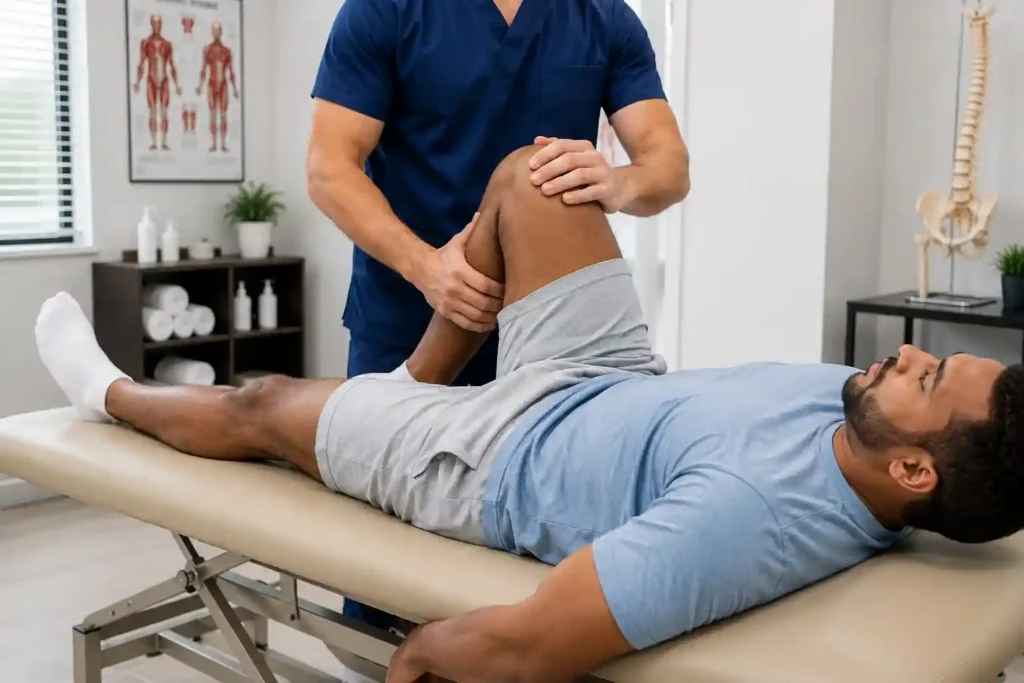
Using skilled hands-on techniques, we work to improve joint mobility, reduce muscular tension, restore healthy movement patterns, and support your body’s natural healing processes.
Whether you’re recovering from an injury, managing chronic pain, or looking to move more comfortably, our goal is to help you improve function while addressing the underlying causes of your symptoms.

Book a consultation and we’ll assess whether Manual Therapy is right for you.
Manual therapy is a hands-on treatment approach used to evaluate and improve the function of muscles, joints, connective tissues, and surrounding structures.
Unlike treatments that rely solely on equipment or passive modalities, manual therapy allows us to assess how your body moves while applying specific techniques designed to improve mobility and reduce mechanical restrictions.
Depending on your condition, treatment may include:
- Joint mobilization
- Soft tissue mobilization
- Myofascial release
- Muscle stretching
- Trigger point therapy
- Manual traction
- Movement re-education
- Chiropractic adjustments when appropriate
Every treatment is selected based on your examination findings rather than following a predetermined routine.
Because every patient presents differently, no two treatment plans are exactly alike.
Our Philosophy: Treat the Cause, Not Just the Symptoms
One of the biggest misconceptions about musculoskeletal pain is that the painful area is always the source of the problem.
In many cases, it isn’t.
For example, shoulder pain may be influenced by restricted movement in the upper back.
Lower back discomfort may be affected by limited hip mobility.
Recurring neck tension may be associated with posture, muscle imbalance, or movement habits developed over time.
That’s why we don’t simply treat the area that hurts.
Instead, we evaluate how your joints, muscles, posture, and movement patterns work together.
This allows us to identify factors that may be contributing to your symptoms and develop a treatment plan focused on improving overall function rather than temporarily masking discomfort.
How Manual Therapy Works?
Healthy movement depends on joints that move efficiently, muscles that function properly, and connective tissues that allow smooth, coordinated motion.
When movement becomes restricted—whether because of injury, repetitive activities, poor posture, surgery, or everyday wear and tear—your body often begins to compensate.
Over time, those compensations may contribute to:
- Joint stiffness
- Muscle tightness
- Reduced flexibility
- Limited range of motion
- Changes in posture
- Difficulty performing daily activities
Manual therapy is designed to address these mechanical restrictions through carefully applied hands-on techniques.
Depending on your needs, treatment may help improve joint mobility, reduce muscular tension, support healthy movement, and make everyday activities more comfortable.
Throughout your care, we continually assess your progress and modify treatment based on how your body responds.
Conditions We Commonly Evaluate
Manual therapy may be appropriate for a wide variety of musculoskeletal conditions.
Following a thorough examination, we commonly evaluate patients experiencing:
- Chronic back pain
- Neck pain and stiffness
- Sciatica
- Shoulder pain
- Hip pain
- Knee pain
- Muscle tightness
- Joint stiffness
- Sports injuries
- Repetitive strain injuries
- Tendon irritation
- Postural dysfunction
- Recovery following orthopedic injuries or surgery
- General mobility limitations
Every condition is different.
Our recommendations are always based on your examination findings, medical history, and treatment goals.
Manual Therapy for Back Pain
Back pain is one of the most common reasons people seek chiropractic care.
Whether your symptoms developed after lifting something heavy, sitting for long hours, participating in sports, or gradually over time, reduced mobility and muscle tension can significantly affect everyday life.
During your evaluation, we’ll assess how your spine, pelvis, hips, and surrounding muscles work together.
Because lower back pain often has multiple contributing factors, treatment may involve several manual therapy techniques designed to improve movement while reducing unnecessary stress on affected tissues.
Manual Therapy for Neck Pain
Modern lifestyles place tremendous demands on the cervical spine.
Hours spent working on computers, looking down at mobile devices, driving, or managing daily stress can contribute to restricted movement and muscular tension.
Many patients report:
- Morning stiffness
- Difficulty turning their head
- Tight muscles
- Reduced flexibility
- Pain after long workdays
- Recurring neck discomfort
Manual therapy may help improve cervical mobility while addressing muscle tension and movement restrictions identified during your examination.
Sciatica and Radiating Leg Pain
Pain traveling into the buttock or leg can have several possible causes.
Because symptoms vary from person to person, a careful examination is essential before treatment begins.
We’ll evaluate spinal mobility, neurological findings, joint movement, muscle function, and other contributing factors to determine whether manual therapy may be appropriate as part of your treatment plan.
If another evaluation or healthcare provider is more appropriate, we’ll discuss those recommendations with you.
Shoulder Pain and Limited Mobility
The shoulder is one of the body’s most complex joints.
Pain isn’t always caused by the shoulder itself.
Restrictions involving the neck, upper back, ribs, or surrounding muscles may all influence shoulder movement.
Our examination looks beyond the painful area to understand how these structures work together.
Depending on your findings, treatment may include soft tissue techniques, joint mobilization, stretching, or other manual therapy approaches designed to improve mobility and reduce discomfort.
We Treat People—Not Just Diagnoses
No two patients experience pain the same way.
Two people with the same diagnosis may require completely different treatment plans.
That’s why every recommendation at Cucci Chiropractic begins with listening, evaluating, and understanding your individual goals.
Our focus isn’t simply helping you feel better today.
Our goal is helping you move better tomorrow, next month, and for years to come.
What to Expect During Your First Visit
At Cucci Chiropractic, we believe effective manual therapy begins with a careful evaluation. We don’t start with a predetermined treatment routine or assume that the area where you feel pain is automatically the source of the problem.
Your first visit gives us the opportunity to understand your symptoms, evaluate how your body moves, and determine which treatment techniques may be appropriate for your individual needs.
Your Consultation
We’ll begin by discussing your current concerns and how they’re affecting your daily life.
We may ask about:
- When your symptoms began
- Activities that make your symptoms better or worse
- Previous injuries or accidents
- Your medical and surgical history
- Treatments you’ve already tried
- Your work and daily activities
- Exercise and recreational habits
- Your personal treatment goals
This information helps us understand the history behind your symptoms and identify factors that may be influencing your movement or recovery.
We also encourage you to ask questions. We want you to understand our recommendations and feel informed about every stage of your care.