Non-Surgical Treatment for Chronic Tendon, Muscle, and Joint Pain
Living with chronic pain can affect nearly every part of your life. Whether it’s persistent heel pain that makes walking uncomfortable, shoulder pain that limits your movement, or an old sports injury that never seems to heal completely, ongoing discomfort can interfere with work, exercise, sleep, and the activities you enjoy most.
At Cucci Chiropractic, we understand that every patient experiences pain differently. That’s why we don’t believe in one-size-fits-all treatment plans. Before recommending any therapy, we perform a comprehensive evaluation to understand what’s contributing to your symptoms and determine the most appropriate treatment approach for your individual needs.
For some patients, that treatment may include Extracorporeal Shockwave Therapy (ESWT).
Shockwave Therapy is a non-invasive treatment that uses acoustic sound waves to stimulate your body’s natural healing response within injured or chronically irritated soft tissues. Rather than simply masking discomfort, the goal of treatment is to encourage the body’s normal repair processes while helping improve function and mobility.
Whether you’re dealing with plantar fasciitis, tennis elbow, Achilles tendon pain, shoulder injuries, or another chronic musculoskeletal condition, Shockwave Therapy may become an important part of your personalized treatment plan.
Book a consultation and we’ll assess whether shockwave therapy is right for you.
Shockwave Therapy, also known as Extracorporeal Shockwave Therapy (ESWT), is an advanced treatment used to manage chronic musculoskeletal conditions involving tendons, ligaments, muscles, and other soft tissues.
Despite its name, there is no electrical shock involved.
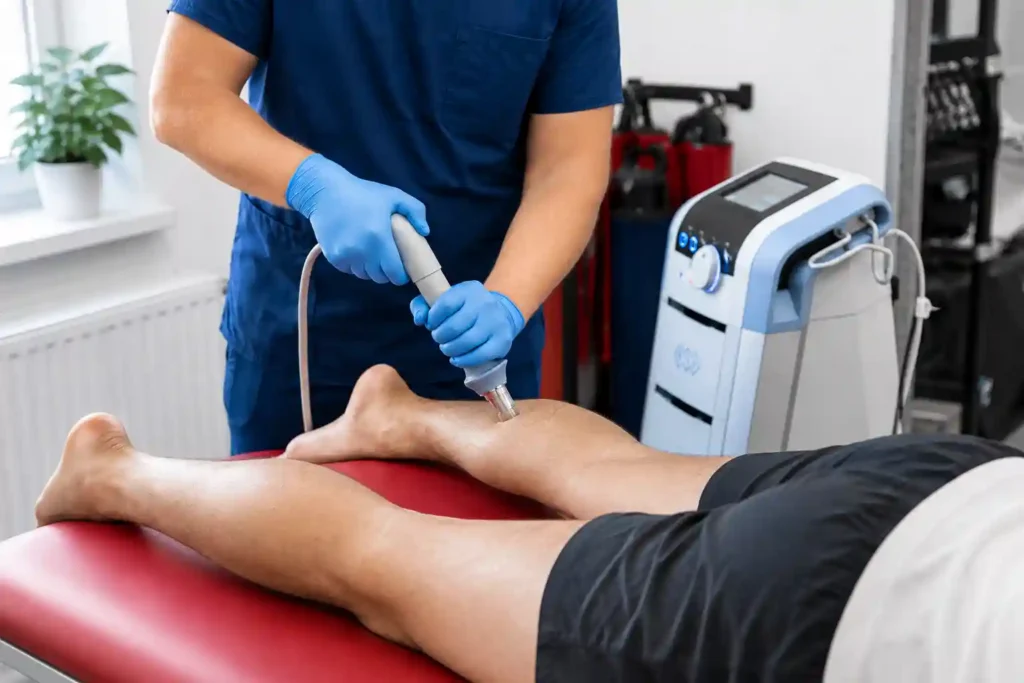
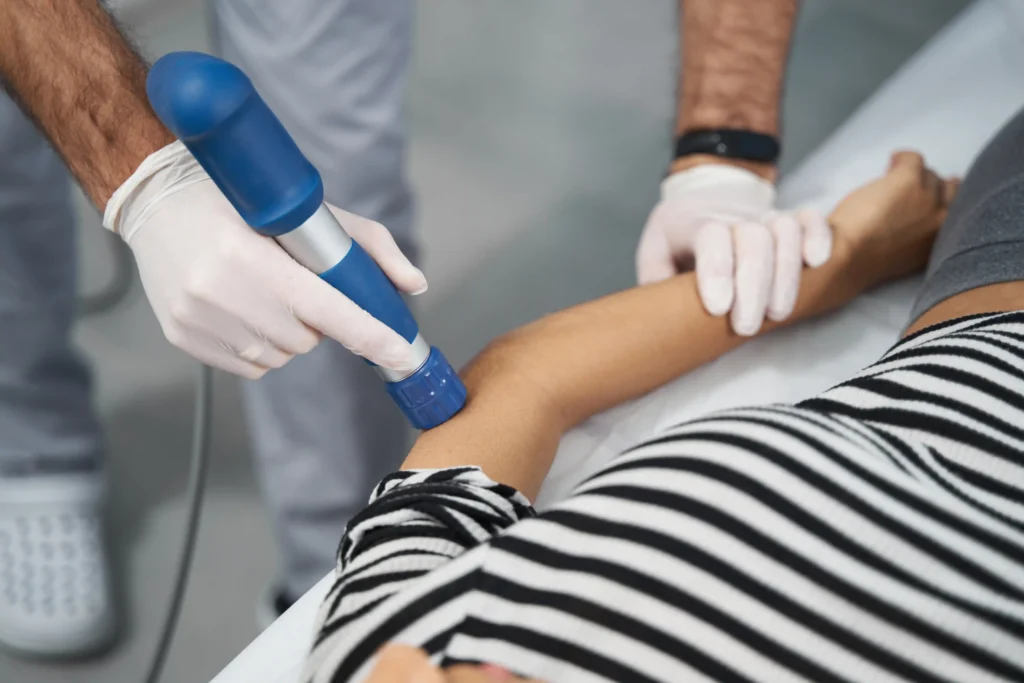
Instead, the technology produces controlled acoustic sound waves that are delivered through a handheld applicator placed over the injured area.
These acoustic waves are intended to stimulate the body’s natural healing response while supporting circulation and tissue remodeling in areas that have not responded well to conservative treatment alone.
Because the treatment is completely non-invasive, there are:
- No surgical incisions
- No injections
- No anesthesia
- Minimal downtime
- No lengthy recovery period
For many patients, Shockwave Therapy offers a conservative treatment option before considering more invasive procedures.
How Does Shockwave Therapy Work?
Healthy tissues constantly repair themselves through your body’s natural healing processes.
Sometimes, however, injuries don’t heal as expected.
Repetitive stress, overuse, poor circulation, aging, or previous injuries can slow normal tissue repair, allowing discomfort to persist long after the original injury occurred.
Shockwave Therapy is designed to stimulate these natural healing processes by delivering controlled acoustic energy directly into the affected tissues.
During treatment, the acoustic waves interact with the injured area and may help support the body’s normal repair response.
Depending on your condition, treatment goals may include:
- Supporting healthy blood circulation
- Encouraging normal tissue remodeling
- Improving mobility
- Reducing muscle tightness
- Supporting tendon healing
- Improving function during daily activities
Because every patient responds differently, we’ll continually evaluate your progress throughout your treatment plan and make recommendations based on your individual response.
Conditions We Commonly Evaluate
Shockwave Therapy may be considered for a variety of chronic musculoskeletal conditions after a thorough examination.
At Cucci Chiropractic, we commonly evaluate patients experiencing:
Plantar Fasciitis
Plantar fasciitis is one of the most common causes of heel pain.
Many patients describe sharp discomfort during their first steps in the morning or after long periods of sitting.
When conservative treatments haven’t provided adequate improvement, Shockwave Therapy may be considered as part of a broader treatment plan designed to support healing of the plantar fascia.
Achilles Tendinopathy
The Achilles tendon experiences tremendous stress during walking, running, jumping, and many everyday activities.
Overuse or repetitive strain can lead to chronic tendon irritation, stiffness, and pain.
Our examination helps determine whether Shockwave Therapy may be appropriate for supporting recovery while improving function and mobility.
Tennis Elbow
Tennis elbow isn’t limited to athletes.
Many people develop this condition through repetitive gripping, lifting, typing, or occupational activities.
Symptoms often include pain along the outside of the elbow, reduced grip strength, and discomfort during everyday tasks.
Shockwave Therapy may be incorporated into a personalized treatment plan for appropriate candidates.
Golfer’s Elbow
Pain along the inside of the elbow can make lifting, carrying, or gripping objects uncomfortable.
Because every case is different, we’ll evaluate your symptoms, activity level, and overall function before recommending treatment.
Rotator Cuff Tendinopathy
Shoulder pain can significantly affect sleep, work, and recreational activities.
Restricted movement involving the rotator cuff may make reaching overhead, lifting objects, or exercising difficult.
Following a thorough examination, Shockwave Therapy may be considered as part of a comprehensive treatment plan designed to improve shoulder function.
Calcific Tendinitis
Calcific tendinitis occurs when calcium deposits develop within a tendon, commonly affecting the shoulder.
These deposits can contribute to pain and reduced mobility.
Depending on your condition and imaging findings, Shockwave Therapy may be one of several conservative treatment options we discuss.
Chronic Muscle And Tendon Pain
Some patients experience persistent tendon or muscle discomfort that has continued despite rest, stretching, or other conservative treatments.
Rather than focusing only on the painful area, we evaluate how your muscles, joints, posture, and movement patterns work together.
This comprehensive approach helps us determine whether Shockwave Therapy is appropriate or whether another treatment strategy may better address your condition.
We Treat People – Not Just Conditions
One of the most important parts of your visit isn’t deciding whether you need Shockwave Therapy.
It’s understanding why your symptoms developed in the first place.
Pain often has multiple contributing factors.
Poor movement patterns, muscle imbalances, joint dysfunction, repetitive activities, previous injuries, and lifestyle habits can all influence recovery.
That’s why every treatment recommendation begins with a comprehensive examination.
If we believe Shockwave Therapy is appropriate, we’ll explain how it fits into your overall care plan.
If another treatment approach is more appropriate, we’ll explain that too.
Our goal is always to recommend the treatment that’s best for you, not simply the newest technology.
What Happens During Shockwave Therapy?
If Shockwave Therapy is recommended, we’ll explain each step of the procedure before treatment begins.
A small amount of conductive gel is applied to the treatment area, allowing the handheld applicator to transmit acoustic waves efficiently into the affected tissues.
During treatment, you’ll feel a series of rhythmic pulses delivered to the targeted area. Depending on the location and sensitivity of the tissue, the sensation may feel like gentle tapping or brief pressure. Some areas may be more sensitive than others, but treatment is generally well tolerated and can be adjusted based on your comfort level.
Most sessions take approximately 15 to 20 minutes, depending on the condition being treated.
Because Shockwave Therapy is non-invasive, you can typically return to most of your normal daily activities shortly after your appointment. We may recommend temporarily modifying high-impact or strenuous activities to support your recovery, depending on your diagnosis.
Why Patients Choose Cucci Chiropractic
Patients choose Cucci Chiropractic because we take a personalized, conservative approach to musculoskeletal care.
Rather than rushing into treatment, we begin by understanding your condition, identifying the factors contributing to your symptoms, and creating a plan tailored to your individual goals.
Our care focuses on:
- Thorough evaluations
- Honest recommendations
- Personalized treatment plans
- Evidence-informed chiropractic care
- Conservative, non-surgical treatment options
- Long-term musculoskeletal health
Whether Shockwave Therapy becomes part of your care or we recommend another approach, our commitment remains the same: helping you make informed decisions and supporting your recovery with compassionate, individualized care.
What Are the Benefits of Shockwave Therapy?
Every patient responds differently to treatment, and no therapy can guarantee specific results. However, Shockwave Therapy may offer several potential benefits for appropriately selected patients.
These may include:
- Improved mobility
- Reduced discomfort during daily activities
- Support for the body’s natural healing response
- Increased tolerance for exercise and rehabilitation
- Improved tendon and soft tissue function
- A non-surgical treatment option for certain chronic conditions
- Minimal downtime compared to more invasive procedures
For many patients, Shockwave Therapy is most effective when combined with other conservative treatments such as chiropractic care, therapeutic exercise, stretching, and lifestyle modifications.
Our goal is to create a treatment plan that addresses the underlying factors contributing to your symptoms rather than relying on a single therapy alone.
How Many Treatments Will I Need?
The number of treatments varies from one patient to another.
Recommendations depend on several factors, including:
- Your diagnosis
- How long you’ve been experiencing symptoms
- The severity of the condition
- Your overall health
- Your activity level
- How your body responds to treatment
Some patients notice changes within the first few visits, while others experience more gradual improvement over the course of treatment.
Throughout your care, we’ll regularly evaluate your progress and make recommendations based on your response rather than following a fixed schedule.
Is Shockwave Therapy Right for Everyone?
No.
While Shockwave Therapy can be an excellent option for some patients, it isn’t appropriate for every condition or every individual.
Before recommending treatment, we’ll review your medical history, examine the affected area, and determine whether Shockwave Therapy is suitable for your specific situation.
Depending on your health history, we may recommend an alternative treatment approach if we believe it offers a safer or more effective option.
Your health and safety always guide our recommendations.