
Pregnancy brings significant changes to your body.
As your baby grows, your center of gravity shifts, your posture adapts, and the muscles and joints surrounding your lower back and pelvis may experience new physical demands. Activities that once felt simple—walking, sleeping, standing, sitting, or getting out of a chair—may become uncomfortable.
At Cucci Chiropractic, we understand that chiropractic care during pregnancy requires a thoughtful, individualized approach.
For some expectant mothers, we may incorporate the Webster Technique into a personalized care plan.
The Webster Technique is a specific chiropractic analysis and adjustment approach focused on the relationship between the sacrum, pelvis, and surrounding soft tissues. It uses gentle chiropractic care adapted to the physical changes that occur during pregnancy.
The technique is not an obstetric procedure, and it is not used to manually turn or reposition a baby.
Our goal is to evaluate how your pelvis and lower back are functioning, identify areas of musculoskeletal restriction, and determine whether gentle chiropractic care may support greater comfort and mobility during pregnancy.
Before recommending care, we review your pregnancy history, symptoms, health concerns, and goals. We explain what we find and make recommendations based on your individual needs.
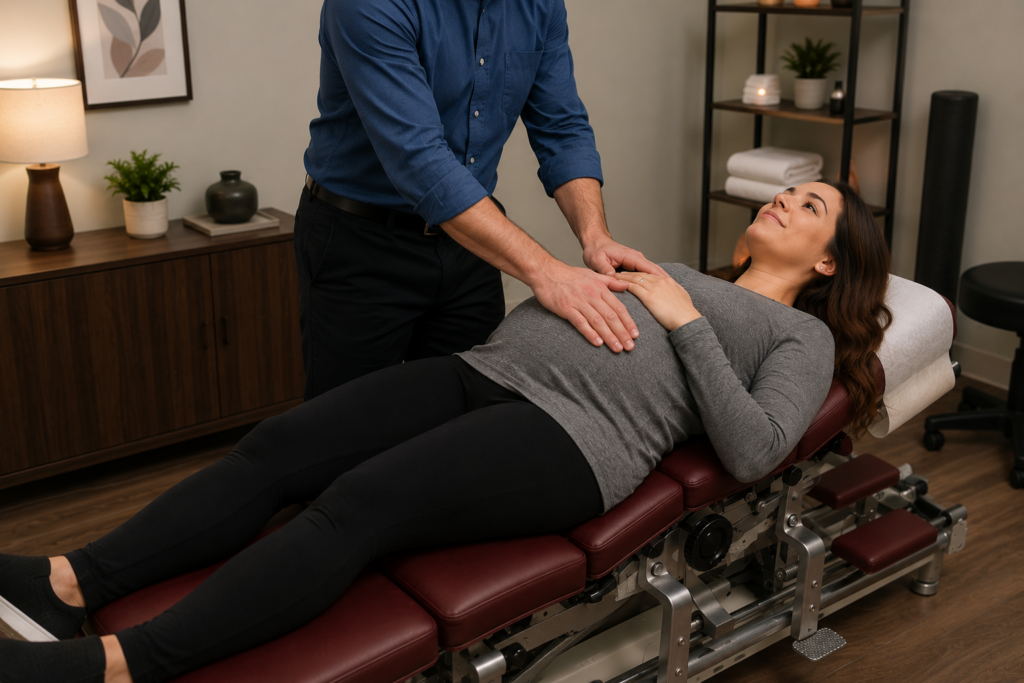
Book a consultation and we’ll assess whether Webster Technique Chiropractic Care is right for you.
The Webster Technique is a specific chiropractic technique developed by Dr. Larry Webster.
It includes an assessment of the sacrum and pelvis, followed by gentle chiropractic adjustments and attention to related soft tissue tension when appropriate.
The sacrum is the triangular bone located at the base of the spine. It connects with the pelvic bones at the sacroiliac joints and plays an important role in posture, weight distribution, and movement.
During pregnancy, changes in body weight, posture, and ligament flexibility may influence how the lower back and pelvis feel and function.
The Webster Technique focuses on identifying musculoskeletal findings involving this area.
Depending on what we find, care may include:
- Gentle sacral adjustments
- Pelvic and lower back evaluation
- Soft tissue assessment
- Pregnancy-appropriate positioning
- Postural recommendations
- Movement and mobility guidance
- Home-care suggestions when appropriate
We do not use the same treatment on every pregnant patient.
Your care depends on your trimester, symptoms, physical findings, health history, and comfort level.
What the Webster Technique Does—and Does Not Do
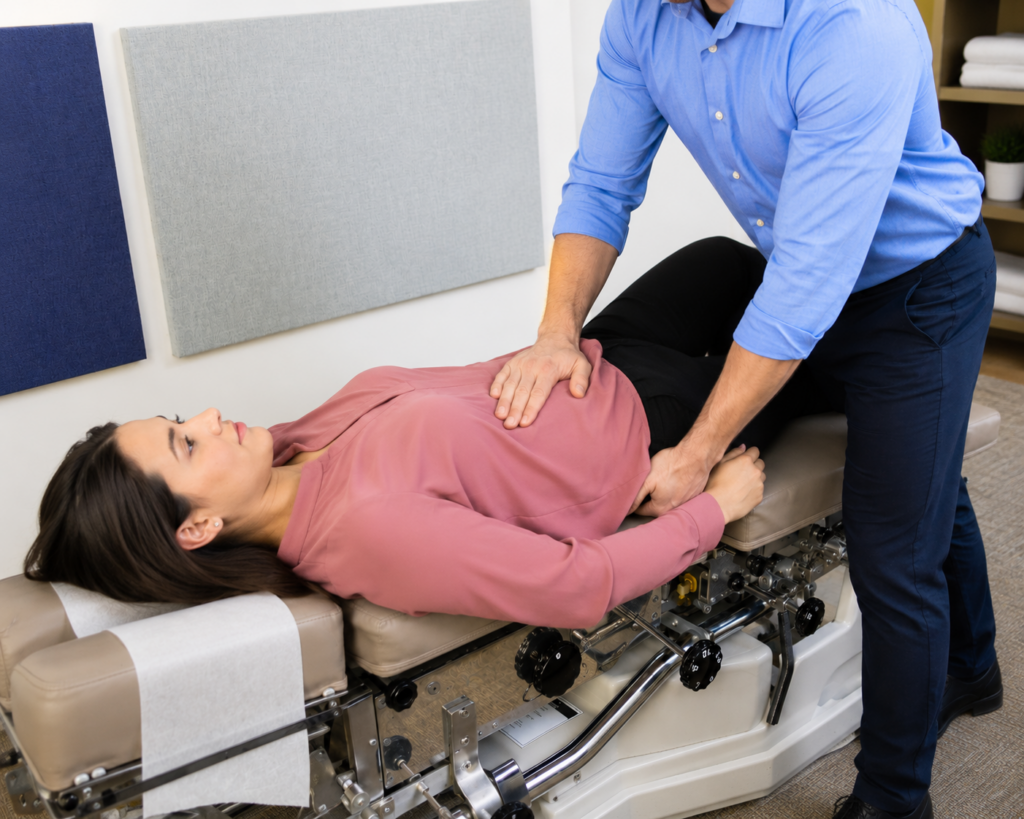
There is considerable misinformation online about the Webster Technique.
It is often described as a method for turning a breech baby or guaranteeing optimal fetal positioning.
That is not an accurate way to describe chiropractic care.
The Webster Technique does not involve applying pressure to the abdomen to move the baby, and we do not claim that a chiropractic adjustment can guarantee a particular fetal position or birth outcome.
Instead, the technique addresses the pregnant patient’s musculoskeletal system.
We evaluate pelvic and sacral function and provide gentle chiropractic care when appropriate.
Changes in maternal comfort or pelvic mobility may be meaningful for some patients, but individual responses vary.
Questions about fetal position, pregnancy complications, labor, or delivery should always be discussed with your obstetrician, midwife, or other qualified prenatal healthcare provider.
We are happy to coordinate care when appropriate.
Why Pregnancy May Affect the Lower Back and Pelvis?
Your body adapts continuously throughout pregnancy.
Several changes may influence the way you move and feel.
A Shifting Center of Gravity
As the abdomen grows, your center of gravity moves forward.
Your lower back may arch more, your pelvis may change position, and surrounding muscles may work harder to support you.
These adaptations may contribute to muscle fatigue, stiffness, or discomfort.
Changes in Ligament Flexibility
Pregnancy-related hormonal changes affect the ligaments that support your joints.
Greater ligament flexibility is a normal part of pregnancy, but it may also influence how stable or comfortable certain joints feel.
Because of these changes, chiropractic care during pregnancy should be gentle and adapted to your current stage of pregnancy.
Altered Posture
Pregnancy may change the way you stand, sit, walk, and sleep.
You may shift your weight differently or use certain muscles more than others.
These compensation patterns may contribute to tension through the lower back, hips, pelvis, or upper body.
Increased Physical Demand
Daily activities may require more effort as pregnancy progresses.
Standing for long periods, climbing stairs, working at a desk, carrying other children, or sleeping in unfamiliar positions may all influence musculoskeletal comfort.
At Cucci Chiropractic, we consider these everyday demands when developing your care plan.
Pelvic and Hip Discomfort During Pregnancy
The pelvis supports the growing uterus and helps transfer weight between the spine and legs.
As pregnancy progresses, the joints and muscles surrounding the pelvis may experience additional physical stress.
You may feel discomfort when:
- Walking
- Standing on one leg
- Turning in bed
- Climbing stairs
- Getting into a car
- Rising from a seated position
- Standing for an extended period
We evaluate how your lower back, pelvis, hips, and surrounding muscles work together.
When appropriate, care may include gentle adjustments, soft tissue techniques, movement recommendations, or practical modifications for everyday activities.
Our goal is not to force your pelvis into a supposedly perfect position.
Our goal is to support comfortable and functional movement based on your individual findings.
Sciatica-Like Symptoms During Pregnancy
Some pregnant patients experience discomfort that travels through the buttock or leg.
These symptoms are often described as sciatica, although not every case of leg pain involves the sciatic nerve.
During your examination, we may evaluate:
- Lower back movement
- Pelvic function
- Hip mobility
- Muscle tension
- Leg movement
- Sensation
- Strength
- Neurological findings when appropriate
If the symptoms appear suitable for conservative chiropractic care, we may discuss the Webster Technique or another pregnancy-appropriate approach.
New or worsening weakness, loss of sensation, changes in bladder or bowel control, severe pain, or other concerning symptoms require prompt medical evaluation.
Webster Technique Care
Is the Webster Technique Safe During Pregnancy?
The Webster Technique is designed as a gentle chiropractic approach, but no healthcare treatment should be described as universally safe for every person or every pregnancy.
Before providing care, we review your health history and current pregnancy-related concerns.
We encourage you to tell us about:
- Pregnancy complications
- Vaginal bleeding
- Placental concerns
- High blood pressure
- Preeclampsia
- Premature labor concerns
- Significant swelling
- Recent trauma
- Severe or unusual pain
- Restrictions from your obstetrician or midwife
Depending on your situation, we may ask you to speak with your prenatal provider before treatment.
We adapt positioning and technique according to your pregnancy stage and comfort.
We do not place unnecessary pressure on the abdomen or use forceful twisting movements as part of the Webster Technique.
When Can I Begin Webster Technique Care?
There is no universal week when every patient should begin chiropractic care.
Some patients seek an evaluation early in pregnancy because of preexisting back or pelvic concerns.
Others develop symptoms during the second or third trimester as their posture and physical demands change.
The appropriate timing depends on your individual needs, health history, symptoms, and prenatal care.
You do not need to begin treatment simply because you are pregnant.
We recommend an evaluation when you have musculoskeletal concerns, questions about movement and comfort, or an interest in pregnancy-aware chiropractic care.
What to Expect During Your First Visit?
Your first visit begins with a detailed conversation.
We may ask about:
- Your current trimester
- Your pregnancy history
- Previous pregnancies
- Current symptoms
- Previous back or pelvic concerns
- Injuries
- Your medical history
- Your prenatal healthcare
- Daily activities
- Exercise
- Work demands
- Your goals for care
Next, we perform an examination adapted to your pregnancy.
Depending on your symptoms, we may evaluate:
- Posture
- Pelvic and sacral movement
- Range of motion
- Muscle tension
- Hip mobility
- Walking
- Functional movement
- Neurological findings when appropriate
We explain what we observe before recommending treatment.
We do not automatically adjust every patient during the first appointment.
If additional medical input is needed, we will discuss that before proceeding.
What Happens During a Webster Technique Adjustment?
We use pregnancy-appropriate positioning to help you remain comfortable.
Depending on your trimester and the equipment available, we may use supportive pillows, cushions, or a table designed to accommodate the abdomen.
The Webster Technique typically involves a gentle assessment and adjustment of the sacral or pelvic region.
We may also evaluate related soft tissue tension when appropriate.
You may feel light pressure or controlled movement, but treatment should not feel unnecessarily forceful.
We communicate with you throughout the session.
If any position or technique feels uncomfortable, tell us immediately so we can modify or stop treatment.
How Many Visits Will I Need?
There is no standard visit schedule that applies to every pregnant patient.
Recommendations may depend on:
- Your symptoms
- Your trimester
- How long the concern has been present
- Your activity level
- Previous injuries
- Your health history
- Your response to care
- Your individual goals
Some patients seek short-term care for a specific musculoskeletal concern.
Others choose periodic care as their body changes throughout pregnancy.
We reassess your progress and adjust our recommendations accordingly.
We do not require every patient to follow the same prenatal treatment plan.
At-Home Support During Pregnancy
Depending on your condition and the guidance of your prenatal provider, we may discuss practical strategies such as:
- Changing positions regularly
- Using supportive pillows during sleep
- Avoiding prolonged standing or sitting
- Practicing gentle pregnancy-appropriate movement
- Modifying lifting techniques
- Wearing supportive footwear
- Taking regular walking or movement breaks
- Using appropriate support when getting in and out of bed
Any exercise recommendations should be appropriate for your pregnancy and consistent with your prenatal provider’s guidance.
Working With Your Prenatal Healthcare Team
Chiropractic care does not replace prenatal medical care.
Your obstetrician, midwife, or maternal-fetal medicine specialist manages the medical aspects of your pregnancy.
We focus on musculoskeletal evaluation and pregnancy-aware chiropractic care within our professional scope.
When appropriate, we support communication between providers.
If you have questions about fetal position, labor, delivery, contractions, pregnancy complications, or your baby’s health, those questions should be directed to your prenatal healthcare provider.
Why Choose Cucci Chiropractic for Webster Technique Care?
At Cucci Chiropractic, we believe prenatal chiropractic care should be gentle, respectful, and based on the individual patient.
Our approach focuses on:
- Pregnancy-aware evaluations
- Personalized care plans
- Gentle chiropractic techniques
- Comfortable positioning
- Clear explanations
- One-on-one attention
- Honest recommendations
- Coordination with prenatal providers when appropriate
We do not promise to turn a breech baby.
We do not guarantee shorter labor or fewer interventions.
We do not claim that every pregnant patient needs chiropractic treatment.
We evaluate you first.
If the Webster Technique may be appropriate for your musculoskeletal concerns, we will explain why.
If another provider or type of care is more appropriate, we will tell you.
Schedule Your Webster Technique Consultation
If lower back discomfort, pelvic tension, postural changes, or reduced mobility is making pregnancy more physically challenging, we are here to help you understand what may be contributing.
At Cucci Chiropractic, we begin with a personalized, pregnancy-aware evaluation.
We listen to your concerns.
We assess your movement and physical findings.
We consider your pregnancy stage, health history, comfort, and goals.
Then we determine whether the Webster Technique or another gentle chiropractic approach may be appropriate for your individual needs.