If you’ve been living with persistent neck pain, stiffness, headaches, reduced mobility, or discomfort that hasn’t improved with conservative care, you may be looking for a treatment that addresses more than just the symptoms.
At Cucci Chiropractic, we believe every patient deserves a thorough evaluation before treatment begins. Rather than applying the same technique to every patient, we take time to understand your condition, perform a comprehensive examination, and determine which chiropractic approach is most appropriate for your individual needs.
For some patients, that may include Y-Strap spinal decompression.
The Y-Strap is a specialized chiropractic technique designed to apply gentle axial traction to the cervical spine. Unlike traditional manual adjustments that focus on joint manipulation, this technique uses controlled decompression to reduce mechanical stress throughout the neck while encouraging improved spinal mobility.
When appropriate, Y-Strap decompression can be incorporated into a personalized treatment plan alongside other chiropractic techniques and supportive therapies.
Our goal is never simply to perform an adjustment—it’s to identify what’s contributing to your symptoms and recommend the treatment approach that offers the greatest benefit for your specific condition.
Book a consultation and we’ll assess whether Y-Strap Adjustment is right for you.
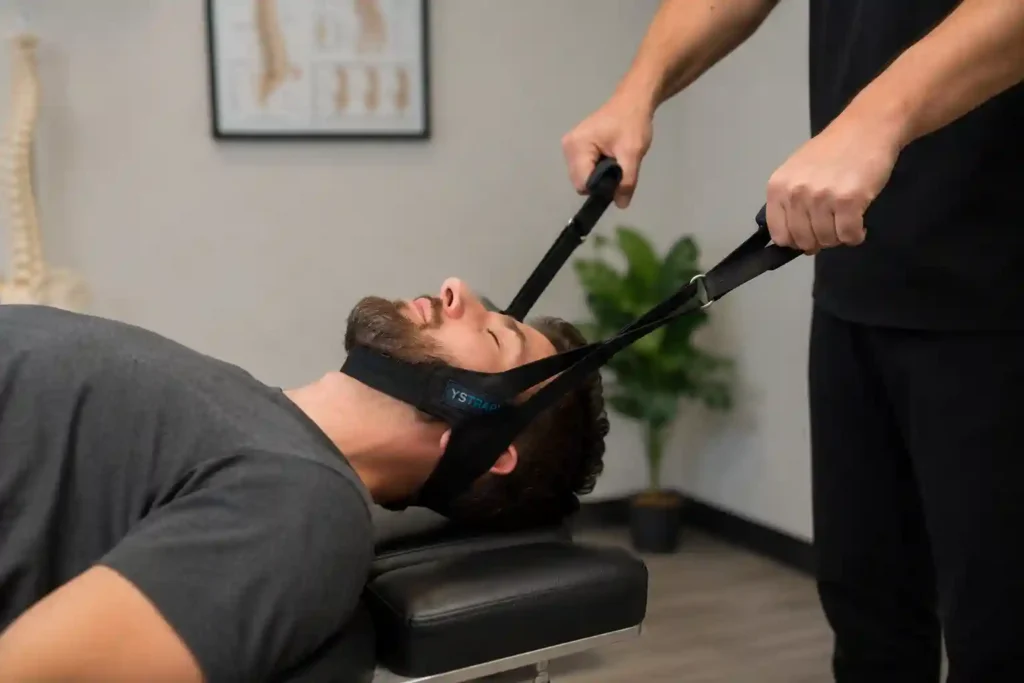
A Y-Strap adjustment is a form of chiropractic spinal decompression that applies controlled traction along the natural axis of the cervical spine.
The technique uses a specially designed Y-shaped strap that fits comfortably around the back of the head while the chiropractor applies a carefully controlled traction force.
Rather than focusing on twisting or rotating the neck, the Y-Strap creates a gentle decompressive stretch through the cervical spine.
This movement is intended to reduce mechanical stress on spinal joints while improving overall mobility.
Many patients first discover the Y-Strap through online videos that emphasize the audible release often associated with the adjustment.
While those videos have made the technique widely recognized, they rarely explain what actually matters.
At Cucci Chiropractic, we don’t perform Y-Strap adjustments for dramatic effects or social media moments.
We recommend the technique only after determining it’s appropriate through a comprehensive clinical evaluation.
Every patient is different, and not everyone is a candidate for cervical decompression.
How Does the Y-Strap Technique Work?
Healthy movement depends on joints that move efficiently and muscles that work together without unnecessary compensation.
Over time, poor posture, repetitive movements, previous injuries, prolonged computer use, athletic activities, or everyday wear and tear may contribute to reduced spinal mobility.
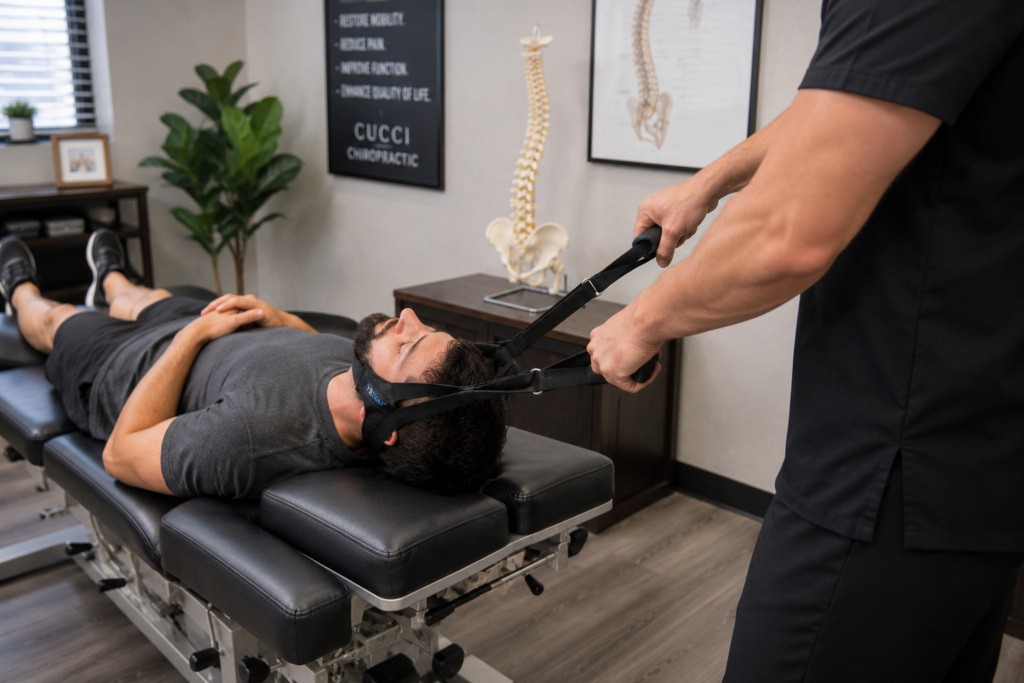
The Y-Strap technique applies a controlled decompressive force through the cervical spine.
Unlike manual rotational adjustments, traction is delivered along the natural axis of the spine.
The goal is to encourage improved joint movement while reducing mechanical stress across the cervical segments.
Before recommending treatment, we evaluate:
- Your posture
- Cervical mobility
- Muscle balance
- Joint function
- Neurological findings
- Orthopedic testing
- Previous injuries
- Medical history
- Imaging studies when appropriate
Only after completing this evaluation do we determine whether Y-Strap decompression is appropriate for your condition.
Our Philosophy: Evaluation Comes Before Adjustment
One of the biggest misconceptions about chiropractic care is that every patient receives the same treatment.
That’s never how we practice.
At Cucci Chiropractic, every recommendation begins with understanding why you’re experiencing symptoms.
Pain is often the final result of a larger movement problem.
The painful area isn’t always the source of the dysfunction.
For example, someone experiencing chronic neck pain may also have:
- Poor posture
- Reduced upper thoracic mobility
- Muscle imbalance
- Previous injuries
- Degenerative joint changes
- Limited shoulder movement
Without understanding those contributing factors, no adjustment technique—including the Y-Strap—can be appropriately recommended.
That’s why every treatment begins with a comprehensive evaluation rather than a predetermined technique.
Who May Be a Candidate for Y-Strap Decompression?
Every patient responds differently to chiropractic care, and no single treatment is appropriate for everyone.
Following a comprehensive examination, Y-Strap decompression may be considered for patients experiencing conditions such as:
- Chronic neck stiffness
- Mechanical neck pain
- Reduced cervical mobility
- Postural dysfunction
- Cervicogenic headaches
- Upper back tightness
- Muscle tension
- Restricted spinal movement
- Certain disc-related conditions
- Joint dysfunction involving the cervical spine
Treatment recommendations are always based on your examination findings, health history, and overall clinical presentation.
If we believe another treatment approach is more appropriate, we’ll explain our reasoning and discuss your options.
Conditions We Commonly Evaluate
Chronic Neck Pain
Neck pain is one of the most common reasons patients seek chiropractic care.
Whether it develops from prolonged computer work, repetitive movements, previous injuries, or everyday stress, reduced cervical mobility can affect nearly every aspect of daily life.
Many patients report:
- Morning stiffness
- Difficulty turning the head
- Pain while driving
- Muscle tightness
- Reduced flexibility
- Pain after long workdays
Following your examination, we’ll determine whether cervical decompression or another chiropractic technique may be appropriate for your condition.
Cervicogenic Headaches
Some headaches begin with restricted movement in the neck rather than the head itself.
These are commonly referred to as cervicogenic headaches.
Patients often describe discomfort beginning near the base of the skull before spreading toward the forehead or temples.
During your examination, we’ll assess spinal mobility, posture, muscle tension, and joint function to determine whether cervical dysfunction may be contributing to your symptoms.
Poor Posture
Modern lifestyles place significant demands on the cervical spine.
Hours spent using computers, smartphones, and tablets can contribute to forward head posture, rounded shoulders, and muscular imbalance.
Rather than simply encouraging better posture, we evaluate why maintaining proper posture has become difficult.
Improving spinal movement, muscle balance, and joint function often plays an important role in supporting better posture over time.
Disc-Related Neck Conditions
Some patients experiencing disc-related neck discomfort may benefit from conservative chiropractic care as part of a broader treatment plan.
Because every disc condition is different, a careful examination is essential before recommending treatment.
When appropriate, spinal decompression techniques may be incorporated alongside other chiropractic therapies designed to improve movement and reduce mechanical stress.
If your examination suggests additional medical evaluation is necessary, we’ll discuss that with you before treatment begins.
Athletes and Active Adults
Whether you’re a recreational runner, golfer, tennis player, weightlifter, or competitive athlete, healthy spinal mobility contributes to efficient movement throughout the body.
Restricted cervical movement can influence posture, shoulder mechanics, and overall performance.
Our goal is to help active patients move more comfortably while reducing unnecessary mechanical stress that may interfere with everyday activities or athletic performance.
Why Patients Choose Cucci Chiropractic?
Choosing a chiropractor involves more than selecting a treatment technique.
Patients choose Cucci Chiropractic because they value individualized care, thorough evaluations, and honest recommendations.
Every patient receives:
- Comprehensive examination
- Personalized treatment planning
- One-on-one care
- Conservative recommendations
- Gentle treatment options when appropriate
- Clear communication throughout every stage of care
We don’t believe every patient needs the same adjustment.
Instead, we focus on understanding your condition first and recommending the treatment approach that best fits your individual needs.