
You look down at your phone for a few minutes… then a few more. Before you know it, your neck feels stiff, your shoulders are tight, and a dull ache has settled in at the base of your skull.
This is tech neck (also called text neck). It’s one of the most common posture-related problems of the modern digital age — and it’s completely fixable for most people.
In this guide you’ll learn exactly what causes tech neck, the symptoms to watch for, the most effective ways to reverse it, and when professional care can speed up your recovery.
Book a consultation and we’ll assess what therapy is right for you.
Tech neck is the pain, stiffness, and muscle tension that develops from holding your head in a forward or downward position for long periods while using phones, tablets, or computers.
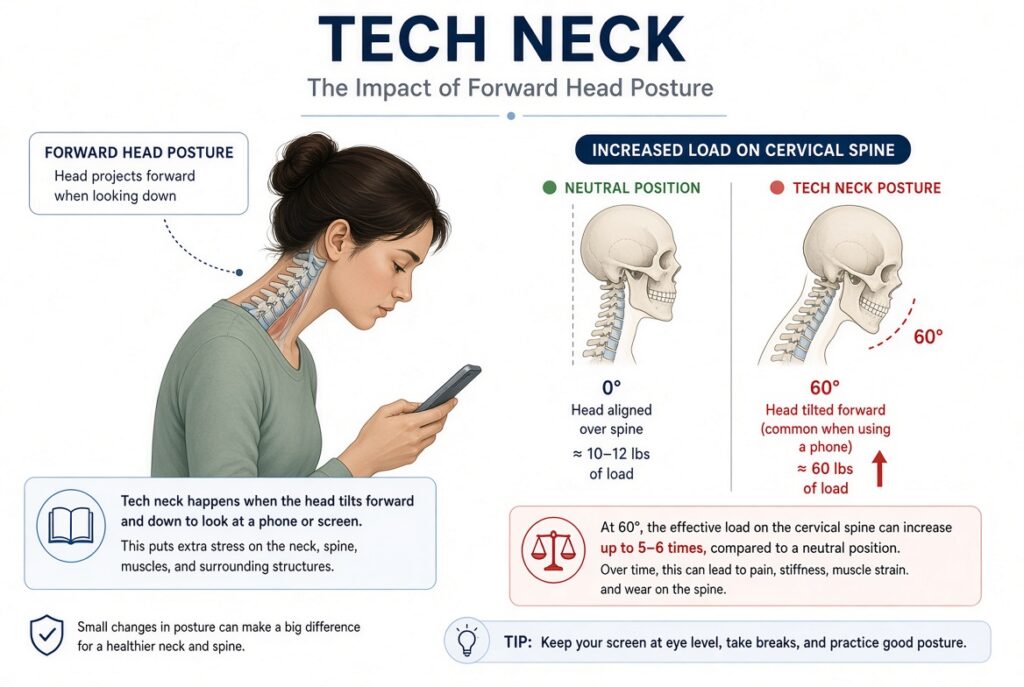
Your head weighs about 10–12 pounds when it’s balanced directly over your spine. Tilt it forward just 15 degrees and the effective load on your neck muscles jumps dramatically. At a 60-degree angle (common when looking at a phone in your lap), the force can feel closer to 60 pounds.
Over time, the muscles in the front of the neck become overstretched while the muscles in the back of the neck and upper shoulders stay constantly contracted. This imbalance is the root of the problem.
Why Tech Neck Develops So Easily
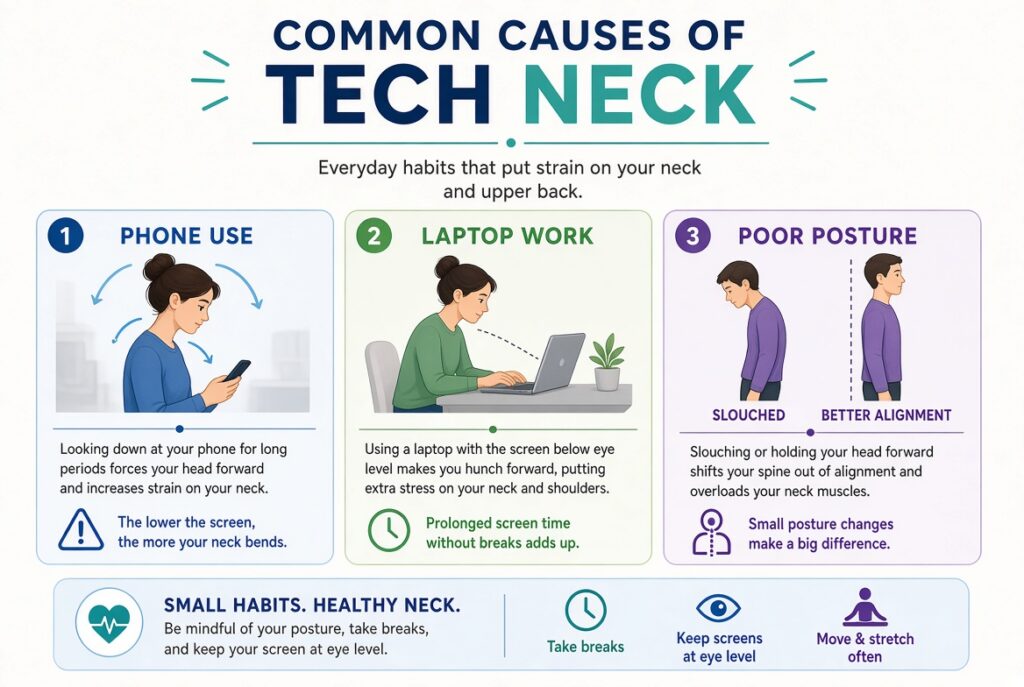
The main drivers are:
- Looking down at a phone or tablet for extended periods
- Working at a laptop or monitor that sits too low
- Sitting for hours without changing position
- Weak upper-back and deep neck muscles
- Stress that causes people to hike their shoulders toward their ears
Portable devices are especially problematic because we use them in so many awkward positions — on the couch, in bed, on the train, or while walking.
Common Symptoms of Tech Neck
Most people notice:
- Stiffness and soreness in the neck and upper shoulders
- A feeling of heaviness or fatigue in the upper back
- Reduced ability to turn the head comfortably
- Tension headaches that start at the base of the skull
- Occasional tingling or numbness into the arms or hands (in more advanced cases)
Left unaddressed, tech neck can contribute to rounded shoulders, forward head posture, and even increased stress on the discs in the neck.
Practical Ways to Fix and Prevent Tech Neck
The good news is that most cases respond well to simple, consistent changes.
1. Raise your screens Keep the top of your computer monitor at or just below eye level. Hold your phone up closer to eye height instead of dropping your chin to look at it.
2. Take movement breaks Change position at least every 20–30 minutes. Stand up, walk around, or simply look up and move your neck in all directions.
3. Improve your sitting posture Sit with your ears roughly over your shoulders, shoulders relaxed, and chin slightly tucked (as if making a gentle double chin).
4. Strengthen the right muscles Focus on the deep neck flexors and the muscles that pull the shoulder blades back and down.
5. Stretch the tight areas Gentle chest openers and upper trapezius stretches help counteract the forward-rounded posture.
6. Use supportive tools A good chair with lumbar support, a monitor arm or stand, and a phone holder can make a big difference.
7. Manage stress and sleep Tension in the neck and shoulders often increases when you’re stressed or sleep-deprived. Simple breathing exercises and consistent sleep habits help.
Best Exercises for Tech Neck
These three simple moves address the most common muscle imbalances:
Chin Tucks Sit or stand tall. Gently draw your chin straight back (like making a double chin) without tilting your head up or down. Hold 5 seconds. Repeat 10 times, 2–3 times per day.
Scapular Retractions (Shoulder Blade Squeezes) Sit or stand tall. Squeeze your shoulder blades together and slightly downward. Hold 10–15 seconds. Repeat 10 times.
Gentle Neck Side Bends Tilt one ear toward the same shoulder until you feel a mild stretch on the opposite side. Hold 20–30 seconds. Repeat on both sides.
Start gently. If any exercise increases pain, stop and consult a professional.
When Professional Care Helps

If symptoms last more than a couple of weeks, keep returning, or start radiating into the arms, it’s time for a proper evaluation.
A skilled chiropractor can:
- Assess your posture and spinal alignment
- Release tight muscles in the neck and upper back with soft tissue techniques
- Restore proper joint motion with gentle adjustments
- Give you a personalized exercise and ergonomic plan
This combination often produces faster and more lasting results than stretching alone.
Frequently Asked Questions
Can tech neck be reversed? Yes. In most cases, consistent posture changes, targeted exercises, and addressing muscle imbalances can significantly reduce or eliminate symptoms.
How long does it take to feel better? Many people notice improvement within 1–3 weeks of consistent habit changes and simple exercises. More established cases may take longer.
Do I need imaging? Usually not for typical tech neck. Imaging is considered if there are neurological symptoms (numbness, weakness, or radiating pain) or if conservative care isn’t helping.
Get Lasting Relief and Better Posture
Tech neck is a modern problem with practical solutions. Small daily changes in how you hold your devices, combined with the right exercises and occasional professional support, can restore comfort and prevent long-term issues.
At Cucci Chiropractic, Dr. Joseph Cucci and the team help patients reverse the effects of tech neck through precise chiropractic adjustments, soft tissue therapy, and practical posture coaching.
Serving New York and New Jersey, they focus on restoring proper alignment and muscle balance so you can use your devices without constant neck pain. If screen time is taking a toll on your neck and shoulders, their personalized approach can help you move more freely and feel better throughout the day.
Don’t let tech neck become a permanent part of your routine. Reach out to Cucci Chiropractic and take the first step toward a more comfortable, upright posture.