Scoliosis is a condition in which the spine develops a sideways curve that may also involve rotation of the vertebrae. While many cases are mild and require only observation, some spinal curves may progress during periods of rapid growth, making early evaluation an important part of ongoing musculoskeletal care.
At Cucci Chiropractic, our scoliosis screenings are designed to identify signs of spinal asymmetry that may warrant additional evaluation. A screening is not intended to diagnose scoliosis but rather to determine whether further assessment is appropriate.
Whether you’re concerned about your child’s posture, have noticed uneven shoulders, or have been advised to schedule a spinal evaluation, our goal is to provide a thorough, patient-centered assessment and explain your findings in a clear, understandable way.
If additional testing or referral to another healthcare professional is recommended, we’ll discuss the next steps based on your individual circumstances.
Book a consultation and we’ll assess whethe Scoliosis Screenings is right for you.
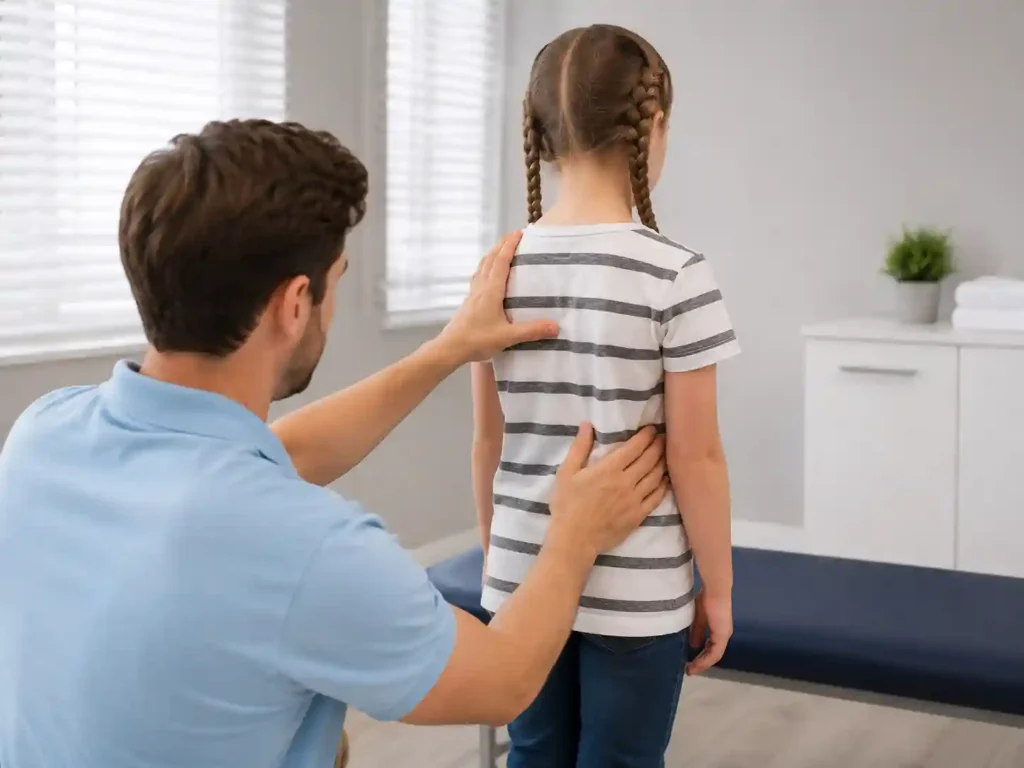
A scoliosis screening is a non-invasive physical examination used to look for signs of spinal asymmetry that may suggest scoliosis or another spinal condition.
The screening does not confirm a diagnosis.
Instead, it helps determine whether additional evaluation may be appropriate.
During the examination, we observe posture, spinal alignment, shoulder height, waist symmetry, and overall body balance while assessing how the spine moves in different positions.
If findings suggest that further evaluation is needed, we may recommend additional assessment, diagnostic imaging when clinically appropriate, or referral to your primary healthcare provider or an orthopedic spine specialist.
Who Should Consider a Scoliosis Screening?
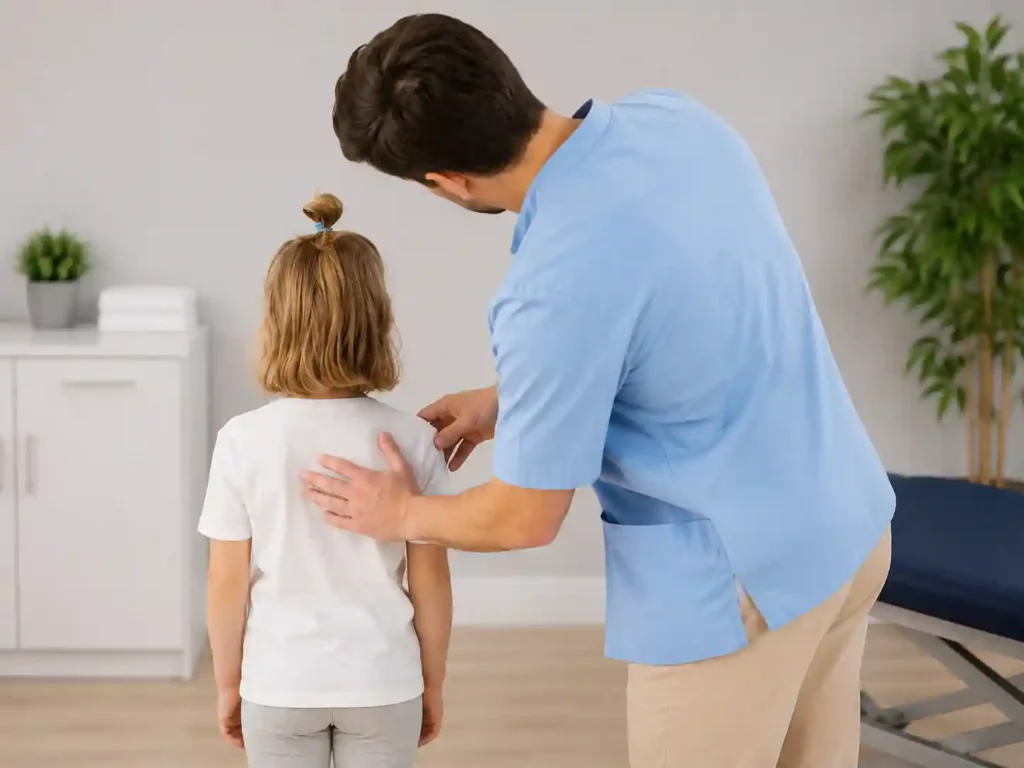
Scoliosis can affect both children and adults.
Many cases of adolescent idiopathic scoliosis develop during periods of rapid growth, often before noticeable symptoms appear.
A screening may be appropriate for:
- Children approaching or experiencing growth spurts
- Adolescents with noticeable changes in posture
- Individuals with a family history of scoliosis
- Children referred after a school screening
- Adults who notice changes in posture or spinal alignment
- Individuals experiencing concerns about uneven shoulders or hips
Not everyone with spinal asymmetry has scoliosis, which is why a professional evaluation is important.
Understanding Scoliosis
Scoliosis is more than poor posture.
It involves a structural curve of the spine that may vary in size, location, and progression.
The exact cause depends on the type of scoliosis.
Some common categories include:
- Adolescent idiopathic scoliosis
- Congenital scoliosis
- Neuromuscular scoliosis
- Degenerative scoliosis in adults
Many cases are mild and never require surgery.
Others may simply require periodic observation during growth.
Because every patient is different, recommendations are based on age, skeletal maturity, examination findings, imaging when appropriate, and guidance from the healthcare team.
Signs That May Warrant an Evaluation
Many people with mild scoliosis experience little or no discomfort.
Instead, physical changes are often noticed first.
Some signs that may prompt a scoliosis screening include:
- Uneven shoulders
- One shoulder blade appearing more prominent
- Uneven waistline
- One hip appearing higher than the other
- Leaning to one side while standing
- Clothing fitting unevenly
- Visible asymmetry when bending forward
These observations do not necessarily mean scoliosis is present, but they may indicate that further evaluation is appropriate.
If you notice these changes, scheduling a professional assessment can help determine whether additional examination is needed.
What Happens During the Screening?
Our scoliosis screenings begin with a discussion about your health history and any concerns you or your family have noticed.
The physical examination may include assessment of:
- Standing posture
- Shoulder alignment
- Pelvic alignment
- Waist symmetry
- Spinal balance
- Range of motion
- Functional movement
One commonly used component of the examination is the forward bend test, which allows us to observe the back from different angles and assess for visible asymmetry.
The examination is gentle, non-invasive, and typically takes only a short time to complete.
After your evaluation, we’ll explain our findings and discuss whether additional evaluation is recommended.
Screening Is Different From Diagnosis
A scoliosis screening is an important first step, but it is not intended to diagnose scoliosis.
If your examination suggests findings that require further investigation, additional assessment may be appropriate.
Depending on your situation, this could include:
- Additional physical examination
- Review of previous imaging
- Diagnostic imaging when clinically indicated
- Referral to your primary care physician
- Referral to an orthopedic spine specialist when appropriate
Our goal is to ensure that every patient receives the most appropriate evaluation based on their individual findings rather than making assumptions from a screening alone.
When Diagnostic Imaging May Be Recommended?
Not every patient who undergoes a scoliosis screening requires X-rays or other imaging.
The decision to recommend imaging depends on several factors, including:
- Physical examination findings
- Age
- Growth status
- Medical history
- Previous imaging
- Clinical guidelines
When imaging is appropriate, it provides additional information that can help healthcare providers better understand spinal alignment and guide future management.
Imaging recommendations are always made on an individual basis rather than as a routine part of every screening.
Monitoring During Growth
For children and adolescents, monitoring spinal development can be an important part of managing scoliosis. During periods of rapid growth, the spine may change as the body develops, which is why healthcare providers may recommend periodic follow-up evaluations for some patients.
Not every child with spinal asymmetry will experience progression, and many spinal curves remain stable over time.
The frequency of follow-up depends on factors such as:
- Age
- Growth stage
- Examination findings
- Previous imaging, when available
- Recommendations from the patient’s healthcare team
Our role is to monitor musculoskeletal changes within the scope of chiropractic care and communicate when additional evaluation may be appropriate.
Conservative Care for Patients with Scoliosis
Every patient with scoliosis has unique needs.
When conservative chiropractic care is appropriate, treatment focuses on supporting overall musculoskeletal health, improving mobility, and helping patients remain as active and comfortable as possible.
Treatment goals may include:
- Supporting normal joint mobility
- Improving flexibility
- Addressing muscle tension
- Encouraging balanced movement patterns
- Promoting postural awareness
- Supporting functional activities
It’s important to understand that chiropractic care is not intended to straighten the spine or reverse structural scoliosis.
Instead, conservative care may be incorporated into a broader management plan developed in collaboration with the patient’s healthcare providers.
Treatment recommendations are always individualized based on the patient’s examination findings, symptoms, age, and overall health.
Therapeutic Exercise and Rehabilitation
Movement is an important component of overall musculoskeletal health.
Depending on your examination findings, we may recommend exercises designed to support flexibility, strength, balance, and coordination.
Your individualized program may include:
- Stretching exercises
- Core strengthening
- Balance training
- Functional movement exercises
- Postural awareness activities
- Home exercise instruction
Exercise recommendations are tailored to each patient’s age, physical abilities, and treatment goals.
As your condition changes, your rehabilitation program may also be adjusted to help support continued progress.
Posture and Daily Activities
Good posture alone does not prevent scoliosis, nor does poor posture cause it.
However, maintaining healthy movement habits and body mechanics may help reduce unnecessary strain on muscles and joints.
During your visit, we may discuss practical recommendations such as:
- Proper sitting posture
- Backpack safety for school-aged children
- Ergonomic workstation setup
- Safe lifting techniques
- Physical activity recommendations
- Stretching routines
- Sleep positioning
These discussions are intended to promote healthy musculoskeletal habits and support your overall well-being.
What Parents Can Expect?
We understand that parents often have questions and concerns when scoliosis is suspected.
Our goal is to provide a comfortable environment where families can ask questions, understand the examination process, and participate in decisions about their child’s care.
During your child’s appointment, we’ll explain:
- What the examination involves
- Our observations during the screening
- Whether additional evaluation is recommended
- Available conservative care options, when appropriate
- When referral to another healthcare provider may be beneficial
We encourage parents to ask questions throughout the visit so they feel informed and confident about the next steps.
Ongoing Follow-Up
Not every patient who undergoes a scoliosis screening requires ongoing chiropractic care.
For some individuals, no additional treatment may be necessary.
Others may benefit from periodic re-evaluation, particularly during growth or if changes in posture or symptoms occur.
Follow-up appointments allow us to:
- Reassess posture and movement
- Monitor changes over time
- Review home exercise programs
- Discuss activity modifications when appropriate
- Determine whether additional evaluation should be considered
These visits are individualized based on each patient’s age, health status, and clinical findings.
Our recommendations are guided by current examination findings rather than a predetermined schedule.
Supporting Long-Term Musculoskeletal Health
Scoliosis is only one aspect of spinal health.
Whether or not scoliosis is identified during your screening, maintaining an active lifestyle, engaging in regular physical activity, practicing healthy movement habits, and participating in age-appropriate exercise all contribute to overall musculoskeletal wellness.
Our goal is to help patients and families better understand spinal health while providing practical, evidence-informed recommendations that support lifelong movement and function.
We believe education is an important part of healthcare, and we work with every patient to ensure they understand their condition, available treatment options, and when additional evaluation may be appropriate.
Why Choose Cucci Chiropractic?
At Cucci Chiropractic, we understand that every patient—and every spine—is unique.
Our approach begins with careful listening, a thorough examination, and individualized recommendations based on your health history, physical findings, and personal goals.
Rather than relying on assumptions or one-size-fits-all treatment plans, we take the time to explain your examination results and discuss whether conservative chiropractic care is appropriate for your situation.
When indicated, we work collaboratively with other healthcare professionals to help ensure you receive comprehensive, coordinated care.
Our patient-centered approach includes:
- Comprehensive musculoskeletal evaluations
- Non-invasive scoliosis screenings
- Individualized chiropractic care when appropriate
- Postural and movement assessments
- Therapeutic exercise recommendations
- Home care education
- Lifestyle and ergonomic guidance
- Ongoing monitoring when appropriate
- Referrals to orthopedic spine specialists or other healthcare providers when clinically indicated
Our goal is to help patients and families make informed decisions while supporting long-term musculoskeletal health through conservative, evidence-informed care.
Supporting Healthy Growth and Lifelong Spinal Health
Good spinal health involves more than identifying spinal curvature.
Regular physical activity, healthy movement habits, proper body mechanics, and routine healthcare evaluations all contribute to overall musculoskeletal wellness throughout childhood and adulthood.
At Cucci Chiropractic, we emphasize education alongside treatment.
We want every patient and family to understand:
- How scoliosis screenings work
- What screening results may mean
- When additional evaluation is appropriate
- The role of conservative chiropractic care
- When referral to another healthcare provider is recommended
By providing clear information and individualized recommendations, we aim to support patients in making confident decisions about their spinal health.
Schedule Your Scoliosis Screening
If you or your child has experienced changes in posture, uneven shoulders, spinal asymmetry, or other concerns about spinal alignment, a professional evaluation can help determine whether further assessment is appropriate.
At Cucci Chiropractic, our scoliosis screenings include a comprehensive musculoskeletal evaluation, discussion of your concerns, and individualized recommendations based on your examination findings. If additional evaluation or referral is recommended, we’ll explain the next steps and help guide you through the process.
Whether you’re seeking reassurance, responding to a school screening recommendation, or looking for a professional assessment of spinal posture, our team is committed to providing compassionate, patient-centered care.