When back pain, leg discomfort, or restricted spinal movement begins affecting the way you sit, walk, work, or exercise, you may start searching for a conservative approach that does not rely on forceful spinal movements.
At Cucci Chiropractor, we understand that every patient has a different comfort level.
Some people are comfortable with traditional chiropractic adjustments. Others prefer a gentler approach because of pain, sensitivity, age, previous injuries, or simply personal preference.
That is why we may incorporate flexion distraction into an individualized chiropractic care plan.
Flexion distraction is a gentle, low-force chiropractic technique that uses a specialized treatment table and controlled spinal movement. Rather than using a quick rotational adjustment, we guide selected areas of your spine through gradual flexion and distraction movements.
Our goal is to understand what is contributing to your symptoms and determine whether this technique may be appropriate for your individual needs.
We do not assume that every back problem is a disc problem.
We evaluate you first.
If flexion distraction or another form of spinal decompression may be appropriate, we will explain why we are recommending it and how it fits into your care.
Book a consultation and we’ll assess whether Flexion Distraction is right for you.
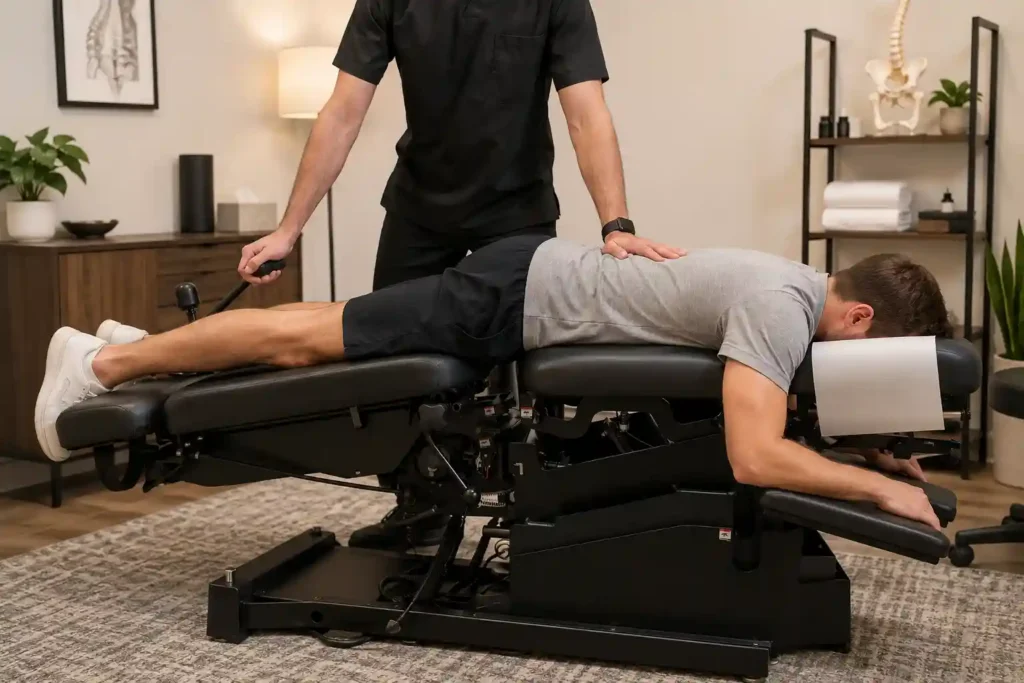
Flexion distraction is a chiropractic technique that uses a specialized segmented treatment table.
During treatment, you typically lie face down while we use the movable sections of the table to guide selected areas of your spine through controlled movements.
The technique combines gentle flexion with distraction.
Flexion refers to a controlled bending movement.
Distraction refers to the gradual separation or unloading of selected spinal structures.
Unlike a traditional high-velocity chiropractic adjustment, flexion distraction uses slower, repetitive movements.
The technique allows us to control the direction, range, and amount of movement based on your comfort and physical findings.
We may consider flexion distraction when evaluating certain lower back, spinal, or disc-related concerns.
However, the name of a condition alone does not determine your treatment.
We first review your symptoms, health history, and examination findings.
How Does Flexion Distraction Work?
Your spine is made up of vertebrae, joints, discs, muscles, ligaments, and nerves that work together during movement.
When one area becomes irritated, restricted, or sensitive, you may begin changing the way you move.
You may avoid bending.
You may sit differently.
You may shorten your stride.
Or you may brace your lower back during ordinary activities.
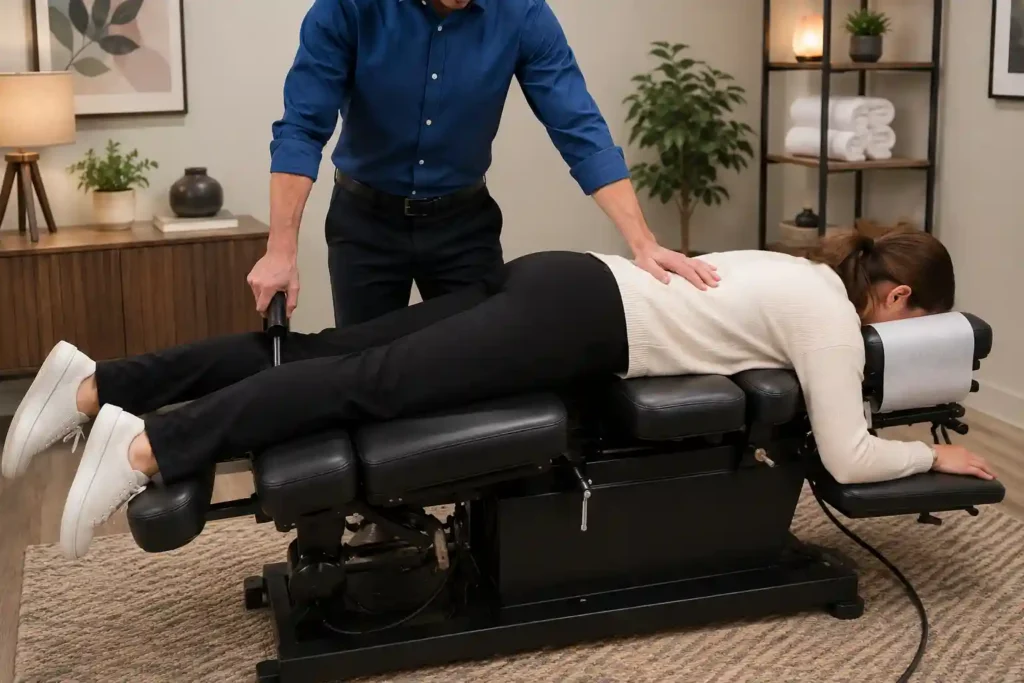
During flexion distraction, we use controlled table movement and hands-on contact to work with selected areas of the spine.
Depending on your individual condition, our treatment goals may include:
- Supporting comfortable spinal movement
- Addressing selected areas of joint restriction
- Providing a low-force chiropractic approach
- Supporting mobility
- Reducing mechanical stress during selected movements
- Complementing other conservative treatments
- Helping you gradually return to everyday activities
We do not tell patients that the table physically “pulls a disc back into place.”
Disc conditions and spinal symptoms are more complex than that.
Instead, we use flexion distraction as a controlled chiropractic technique when our evaluation suggests a gentle, movement-based approach may be appropriate.
What Is Spinal Decompression Therapy?
Spinal decompression is a broad term used to describe treatment approaches designed to apply controlled traction or distraction to the spine.
Different spinal decompression systems may use different equipment and treatment protocols.
Some use mechanical traction.
Flexion distraction uses a specialized table and hands-on guidance.
Although the techniques share certain concepts, they are not identical.
At Cucci Chiropractor, we believe it is important to explain the treatment we are actually recommending rather than using “spinal decompression” as a general marketing term.
If we recommend flexion distraction, we will explain how the table is used.
If another decompression approach is being considered, we will discuss the differences and why it may be appropriate.
The treatment should match your individual findings.
Flexion Distraction vs. Traditional Spinal Decompression
Patients often ask whether flexion distraction and spinal decompression are the same.
They are related, but the techniques may differ.
Flexion Distraction
Flexion distraction uses a specialized table with movable sections.
We use hands-on contact and controlled table movements to guide selected areas of the spine through flexion and distraction.
The technique allows us to modify the movement based on your symptoms and response during treatment.
Mechanical Spinal Decompression
Mechanical spinal decompression typically uses equipment designed to apply controlled traction.
Depending on the system, treatment settings may be selected according to the area being treated and the patient’s individual needs.
The traction is generally delivered by the equipment rather than through the same hands-on table movement used during flexion distraction.
Which Approach Is Right for Me?
We cannot determine that from a symptom list alone.
Two people with lower back pain may have very different examination findings.
One person may have restricted spinal movement.
Another may have symptoms associated with a disc-related concern.
Someone else may have neurological findings that require additional evaluation.
We begin with an assessment and recommend care based on what we identify.
The Cox Flexion Distraction Technique
The Cox Flexion Distraction Technique is a structured chiropractic approach that uses a specially designed treatment table.
The segmented table allows controlled movement of selected spinal regions while we maintain specific hands-on contact.
Depending on the area being addressed, we may guide the table through selected flexion or distraction movements.
The technique is commonly associated with a low-force approach to chiropractic care.
At Cucci Chiropractor, we use treatment equipment with a purpose.
The table itself does not diagnose your condition.
It does not automatically determine the treatment plan.
We first evaluate you.
If we believe flexion distraction may be appropriate, we will explain what we are addressing and why we selected the technique.
Conditions and Symptoms We Commonly Evaluate
We may consider flexion distraction when evaluating selected patients with spinal or musculoskeletal concerns such as:
- Lower back pain
- Restricted spinal movement
- Disc-related symptoms
- Herniated or bulging disc concerns
- Sciatica-like symptoms
- Leg discomfort associated with lower back symptoms
- Certain spinal stenosis-related presentations
- Facet joint-related discomfort
- Persistent back stiffness
- Certain post-injury spinal concerns
This does not mean flexion distraction treats every case listed above.
For example, “sciatica” is often used to describe almost any pain traveling into the leg.
However, leg symptoms may have different causes.
That is why we evaluate your symptoms before recommending treatment.
Flexion Distraction for Herniated and Bulging Disc Concerns
Intervertebral discs sit between the vertebrae of the spine.
They help distribute physical forces and contribute to spinal movement.
Disc-related changes may occur following injury, repetitive stress, or gradually over time.
Some disc findings cause symptoms.
Others may appear on imaging without producing significant discomfort.
If you have been told that you have a herniated or bulging disc, we want to understand how that finding relates to your current symptoms.
We may review:
- The location of your pain
- Leg symptoms
- Numbness or tingling
- Muscle strength
- Range of motion
- Activities that affect your symptoms
- Previous imaging when available
- Neurological findings when appropriate
When our examination suggests that a low-force chiropractic approach may be appropriate, we may incorporate flexion distraction into your care.
We do not promise that treatment will “retract” or “push back” a herniated disc.
Our goal is to use an appropriate conservative technique while monitoring your symptoms and physical function.
Flexion Distraction for Sciatica-Like Symptoms
Pain that travels from the lower back or buttock into the leg is often described as sciatica.
You may also experience tingling, numbness, or changes in sensation.
However, not every leg symptom has the same cause.
During your evaluation, we may assess:
- Spinal movement
- Lower body strength
- Sensation
- Reflexes when appropriate
- Leg movement
- Hip mobility
- Activities that reproduce symptoms
If we believe your symptoms may be appropriate for conservative chiropractic care, flexion distraction may be considered.
If your examination identifies concerning neurological findings or symptoms requiring additional medical evaluation, we will discuss the appropriate next step.
We do not continue routine treatment when the findings suggest you need a different level of care.
Flexion Distraction for Chronic Back Pain
Persistent back pain can affect almost every part of daily life.
Sitting may become uncomfortable.
You may avoid lifting.
Exercise may feel unpredictable.
Even simple activities can become frustrating when you are constantly thinking about your back.
Chronic back pain is also complex.
There is not always one structure responsible for every symptom.
That is why we do not tell every patient that a disc, spinal alignment problem, or “pinched nerve” is automatically the cause.
We evaluate how you move.
We discuss your history.
We consider previous injuries, work demands, and physical activities.
If restricted spinal movement or another musculoskeletal finding may be contributing to your symptoms, flexion distraction may become one part of your individualized care plan.
Is Flexion Distraction a Gentle Chiropractic Technique?
Flexion distraction is generally considered a low-force chiropractic technique.
The movement is controlled and gradual.
There is typically no rapid twisting involved in the technique itself.
This may make flexion distraction appealing to patients who are hesitant about traditional chiropractic adjustments.
However, “gentle” does not mean appropriate for every patient.
Your health history and examination findings still matter.
Before beginning treatment, we want to know about:
- Previous spinal injuries
- Surgery
- Osteoporosis or bone health concerns
- Current medical conditions
- Neurological symptoms
- Medications
- Recent trauma
- Other healthcare treatments
We use this information to determine whether treatment is appropriate or whether additional evaluation may be needed.
What Happens During a Flexion Distraction Session?
Before treatment begins, we will explain what we plan to do.
You will typically lie face down on the specialized treatment table.
We will position you according to the area being evaluated and treated.
During the technique, we use hands-on contact while guiding the movable section of the table through controlled movements.
You may feel gentle stretching or movement through the treated area.
We want you to communicate with us throughout the session.
If a movement increases your symptoms or produces an unexpected sensation, tell us.
We can modify or stop the technique based on your response.
Treatment should not feel like something is being done to you without explanation.
We want you to understand why we selected the technique and what we are evaluating throughout care.
How Long Does a Flexion Distraction Session Take?
Treatment time varies depending on your condition and overall care plan.
The original version of this page stated that every session lasts approximately 15 to 20 minutes.
We do not believe a fixed treatment time should be promised to every patient unless that is the exact office protocol.
Your appointment may include:
- Discussion of your symptoms
- Physical reassessment
- Flexion distraction
- Chiropractic care
- Manual therapy
- Soft tissue techniques
- Movement recommendations
We will explain what your visit may involve based on your individual treatment plan.
When Will I Notice a Change?
Every patient responds differently.
The original page promised meaningful improvement within four to twelve weeks and suggested approximately 20 treatments for chronic conditions.
We do not use a universal recovery timeline.
Your response may depend on:
- Your condition
- How long symptoms have been present
- Previous injuries
- Your health history
- Physical activity
- Work demands
- Examination findings
- Your response to care
Some patients may notice changes in comfort or movement earlier.
Others may progress more gradually.
We monitor your response and reassess your care.
If you are making progress, we will discuss the next steps.
If your symptoms are not responding as expected, we will reconsider the treatment plan rather than automatically continuing the same protocol.
What to Expect During Your First Visit?
Your first visit begins with understanding your symptoms.
We will discuss:
- When your symptoms started
- Where you feel discomfort
- Activities that affect your symptoms
- Previous injuries
- Your medical history
- Previous treatments
- Imaging when available
- Your work and exercise
- Your goals for care
Next, we will perform an examination based on your symptoms.
We may evaluate:
- Range of motion
- Spinal movement
- Joint mobility
- Muscle function
- Posture
- Lower body movement
- Orthopedic findings
- Neurological findings when appropriate
After the examination, we will explain what we found.
If flexion distraction may be appropriate, we will discuss how the technique fits into your care.
If we believe another approach or additional evaluation is needed, we will tell you.
Can We Combine Flexion Distraction With Other Treatments?
Yes, when appropriate.
Flexion distraction may be one component of an individualized care plan.
Depending on our examination findings, we may also consider:
- Chiropractic care
- Manual therapy
- Active Release Technique
- Instrument-Assisted Soft Tissue Mobilization
- Kinesiology taping
- Deep Tissue Laser Therapy
- Neuromuscular re-education
- Mobility recommendations
- Therapeutic movement
We do not automatically use every treatment.
Each technique should have a clear purpose.
If we recommend combining treatments, we will explain why and how each part relates to your individual findings.
Why Choose Cucci Chiropractor for Flexion Distraction?
At Cucci Chiropractor, we believe spinal care should begin with understanding the patient.
We listen to your concerns.
We evaluate how you move.
We consider your health history and previous injuries.
Then we determine which treatment options may be appropriate.
Our approach focuses on:
- Individualized evaluations
- Personalized care plans
- Low-force treatment options
- Clear explanations
- One-on-one care
- Conservative approaches
- Honest recommendations
- Ongoing progress assessment
We do not promise that flexion distraction will fix every herniated disc.
We do not guarantee immediate pain relief.
We do not put every patient through a predetermined 20-session protocol.
We evaluate you first.
If flexion distraction may be appropriate, we will explain why we are recommending it.
If another approach is better suited to your needs, we will discuss that honestly.
Schedule Your Flexion Distraction Consultation
If back pain, disc-related symptoms, or restricted spinal movement is affecting your daily life, we can help you better understand what may be contributing to your discomfort.
At Cucci Chiropractor, we will begin with an individualized evaluation.
We will listen to your concerns.
We will assess your spinal movement and physical findings.
We will consider your health history, previous injuries, and goals.
Then we will determine whether flexion distraction, spinal decompression, or another conservative treatment approach may be appropriate for your individual needs.