If you’ve ever stood up after sitting for a long time and felt a sharp pull or stiffness in the front of your hip, you already know how annoying hip flexor pain can be. It can make walking, climbing stairs, or even just getting out of a chair feel harder than it should.
The good news? In most cases, this is highly treatable — and chiropractic care is one of the most effective non-invasive approaches available.
In this guide, you’ll learn exactly what the hip flexors are, why they get tight or painful, the symptoms that matter, and how a chiropractor can help you move freely again.
Book a consultation and we’ll assess the therapy is right for you.
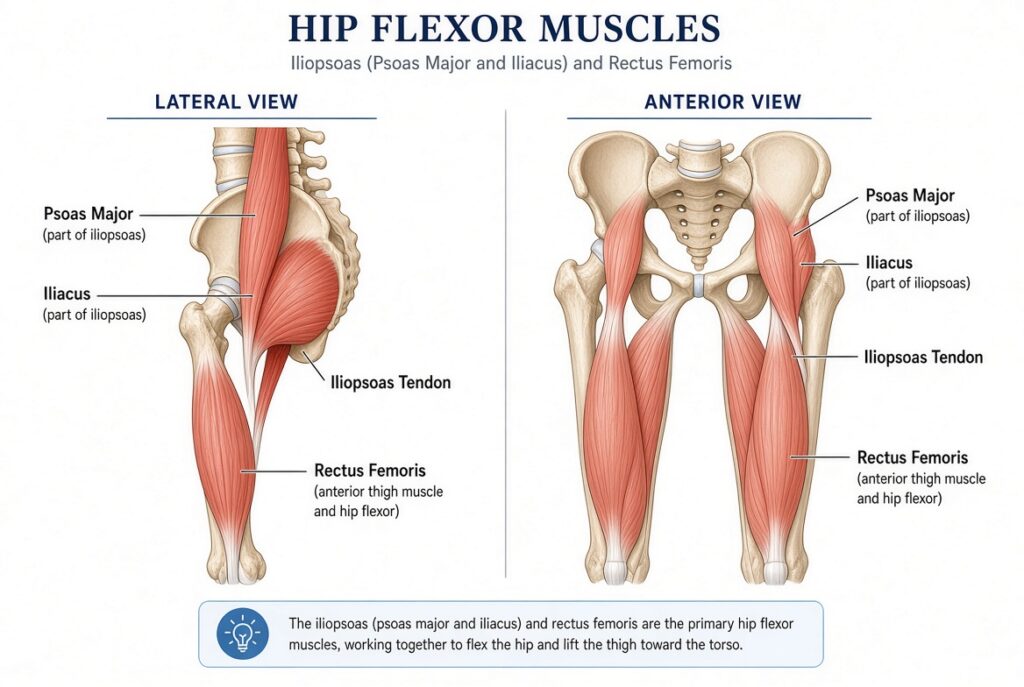
Your hip flexors are a group of muscles at the front of your hips that lift your thigh toward your torso. The main players are:
- The iliopsoas (psoas major + iliacus)
- Rectus femoris (part of your quadriceps)
- Sartorius
These muscles are essential for walking, running, kicking, and even just standing up from a chair. When they become short, tight, or strained, they can pull on your pelvis and lower back, creating a chain reaction of discomfort.
Common Causes of Hip Flexor Pain and Tightness
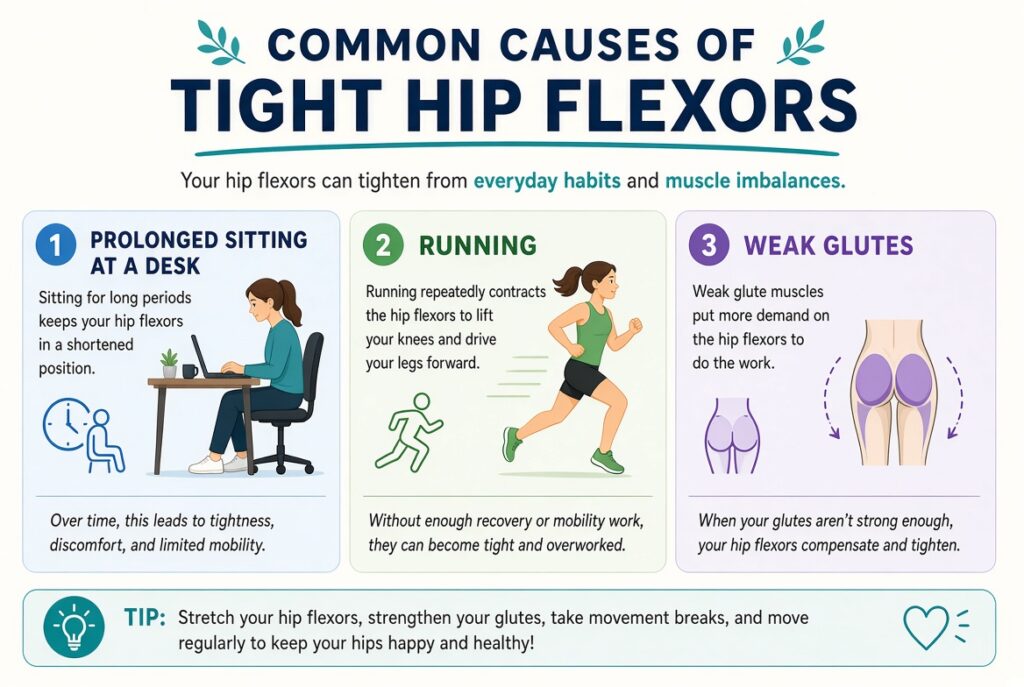
The number one cause in modern life is prolonged sitting. When you sit for hours, your hip flexors stay in a shortened position. Over time they adapt to that length and become chronically tight.
Other frequent causes include:
- Overuse from running, cycling, soccer, or martial arts
- Sudden movements or rapid direction changes
- Weak glutes and core muscles (the hip flexors end up doing extra work)
- Poor posture
- Previous lower back or hip injuries
- Wearing high heels regularly
Athletes and people with desk jobs are both high-risk groups — just for different reasons.
Symptoms You Shouldn’t Ignore
Typical signs of tight or strained hip flexors include:
- Pain or tightness in the front of the hip or groin
- Difficulty lifting the knee toward the chest
- Stiffness after sitting
- Lower back pain (especially after long periods of sitting)
- A feeling that you can’t stand fully upright
- Anterior pelvic tilt (your pelvis tips forward)
If the pain came on suddenly after a specific movement and is accompanied by significant swelling or bruising, get it checked sooner rather than later.
How Chiropractic Care Helps Hip Flexor Pain
Chiropractors don’t just “crack” backs. For hip flexor issues they take a whole-system approach that addresses both the muscles and the joints they attach to.
Here’s what effective care usually includes:
1. Pelvic and spinal adjustments Gentle, precise adjustments restore proper alignment of the pelvis and lower spine. This reduces the constant pull on the hip flexors and improves how the entire kinetic chain moves.
2. Soft tissue therapy Targeted muscle work (including trigger-point therapy and instrument-assisted techniques) releases tightness in the iliopsoas and surrounding muscles, improves blood flow, and decreases inflammation.
3. Specific stretching and strengthening Your chiropractor will prescribe the right combination of stretches to lengthen the hip flexors and exercises to strengthen the glutes and core. This rebalances the forces around the hip so the problem doesn’t keep returning.
4. Posture and movement coaching Simple changes in how you sit, stand, and move during the day make a big difference in long-term results.
When these elements are combined, most people notice reduced pain, better mobility, and improved posture within a few visits.
Complementary Strategies That Speed Recovery
While chiropractic care addresses the root mechanical issues, a few supportive habits accelerate results:
- Daily hip flexor stretches (kneeling lunge stretch is a classic)
- Glute activation exercises (bridges, clamshells)
- Standing and moving every 30–45 minutes if you have a desk job
- Anti-inflammatory nutrition and good hydration
- Avoiding aggressive stretching when the area is acutely irritated
How to Prevent Hip Flexor Problems from Coming Back
Prevention is straightforward once you understand the causes:
- Break up long sitting periods
- Strengthen your glutes and core consistently
- Warm up properly before sports
- Maintain good workstation ergonomics
- Address any lower back or pelvic issues early
When You Should See a Professional
If the tightness or pain has lasted more than a couple of weeks, is getting worse, or is affecting your daily activities and sleep, it’s time for a proper evaluation. A skilled chiropractor can determine whether the problem is primarily muscular, joint-related, or a combination — and create a clear plan.
Frequently Asked Questions
Can a chiropractor really help tight hip flexors? Yes. By improving pelvic alignment, releasing soft tissue restrictions, and correcting muscle imbalances, chiropractic care is highly effective for most cases of hip flexor tightness and pain.
How many visits will I need? It varies, but many patients feel noticeable improvement within 4–8 visits when they also follow the home exercise recommendations.
Is it safe? Chiropractic care for hip flexor issues is considered very safe when performed by a licensed professional. Your chiropractor will screen for any contraindications first.
Get Lasting Relief with Expert Care
Hip flexor pain doesn’t have to be something you just live with. With the right combination of precise adjustments, soft tissue work, and targeted exercises, most people regain comfortable movement and prevent the problem from returning.
At Cucci Chiropractic, Dr. Joseph Cucci and the team specialize in identifying the underlying structural and muscular factors that keep hip flexors tight and painful. Serving patients in New York and New Jersey, they combine gentle chiropractic adjustments, soft tissue therapy, and personalized rehabilitation to help you move better and feel stronger. If front-of-hip tightness or pain is limiting your daily life, their focused, patient-centered approach can make a meaningful difference.
Ready to feel the difference? Reach out to Cucci Chiropractic and take the first step toward freer, more comfortable movement.