
If you’ve ever felt a sharp or aching pain on the outside of your hip that gets worse when you walk, climb stairs, or try to sleep on that side, you’re not alone. Many people call this hip bursitis. But the full story is a bit more nuanced — and understanding it can make a real difference in how quickly you feel better.
This guide walks you through what is actually happening in your hip, why the old “bursitis” label is often incomplete, the symptoms that matter most, and the treatments that research shows work best. We’ll keep things clear, practical, and focused on solutions.
Book a consultation and we’ll assess whether shockwave therapy is right for you.
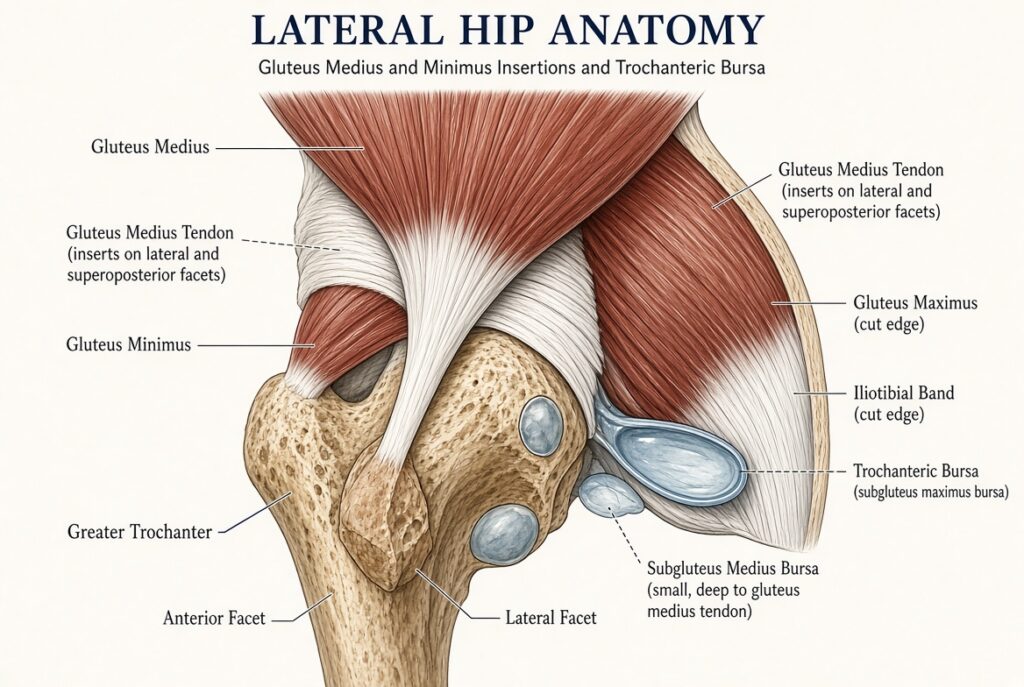
Bursae are small, fluid-filled sacs that act like cushions between bones, tendons, and muscles. When one becomes irritated, it can cause pain. Around the hip, the most common area people complain about is the greater trochanter — the bony point on the outer side of your upper thigh.
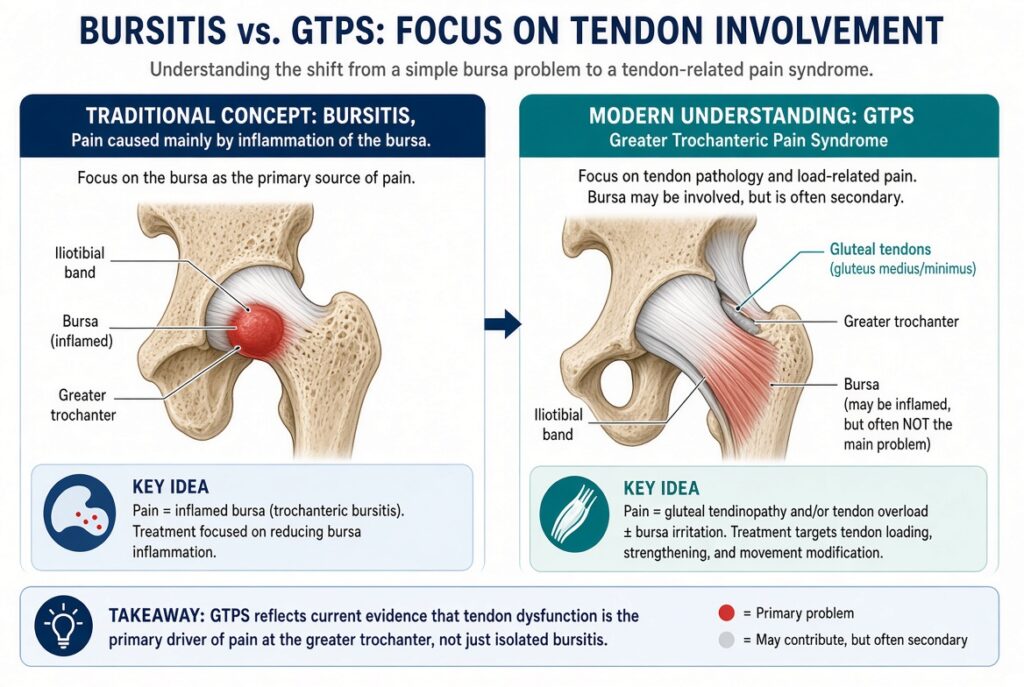
For years, doctors labeled this outer-hip pain “trochanteric bursitis.” Recent imaging studies and clinical research have changed that view. In most cases, the primary problem is not the bursa itself. It is irritation or degeneration of the gluteus medius and gluteus minimus tendons, sometimes with secondary bursal involvement. The broader and more accurate term is greater trochanteric pain syndrome, or GTPS.
True isolated bursitis does occur, but it is less common than once believed. There is also a less frequent form that affects the iliopsoas bursa near the front of the hip and can cause groin pain.
Knowing the difference matters. Treatment that only targets inflammation often falls short if the underlying tendon problem is ignored.
How Common Is This Problem?
GTPS is one of the most frequent causes of lateral hip pain in adults. A large community-based study of adults aged 50 to 70 found unilateral GTPS in about 15% of women and 6.6% of men. Bilateral symptoms were less common but still present in a meaningful number of people. Women are affected roughly four times more often than men, and symptoms typically appear after age 50.
Other estimates put the prevalence in the general population between 10% and 25% in industrialized countries. Many people live with the discomfort for months before seeking help, partly because the pain can come and go or be mistaken for arthritis or back problems.
Symptoms You Should Not Ignore
The classic sign is pain on the outer side of the hip. It often starts as a sharp discomfort and settles into a deeper ache. Common triggers include:
- Lying on the affected side at night
- Climbing stairs or getting up from a chair
- Prolonged walking or standing
- Crossing your legs
You may also notice tenderness when you press on the bony point of the hip, mild swelling, or a feeling of stiffness after sitting. In some cases the pain travels down the outer thigh.
Red flags that need prompt attention include fever, significant warmth or redness, progressive weakness in the hip, or pain that does not improve with basic rest and activity changes. These can signal infection or a more significant tendon tear.
What Causes Hip Bursitis and GTPS?
Repetitive stress is the biggest driver. Running, cycling, prolonged standing, or even sitting with poor posture can overload the area. Other contributors include:
- Muscle weakness or tightness around the hip and core
- Leg-length differences
- Previous hip surgery or injuries
- Conditions such as osteoarthritis, low back problems, or excess body weight
- Sudden increases in activity level
Women’s wider pelvic structure and hormonal factors appear to play a role in the higher rates seen after midlife. The good news is that many of these factors can be improved with the right approach.
How Doctors Diagnose the Problem?
A skilled clinician can often diagnose GTPS through a careful history and physical exam. They will check for tenderness over the greater trochanter, test strength with resisted movements, and look at how you walk and stand.
Imaging is used when needed. X-rays help rule out arthritis or bone issues. Ultrasound can show the tendons and bursa in real time. MRI is the most detailed option when a tear is suspected or symptoms are not improving.
It is also important to rule out other sources of pain such as hip joint arthritis, labral tears, or problems referred from the lower back. A clear diagnosis prevents wasted time on treatments that miss the real issue.
Treatment That Actually Helps
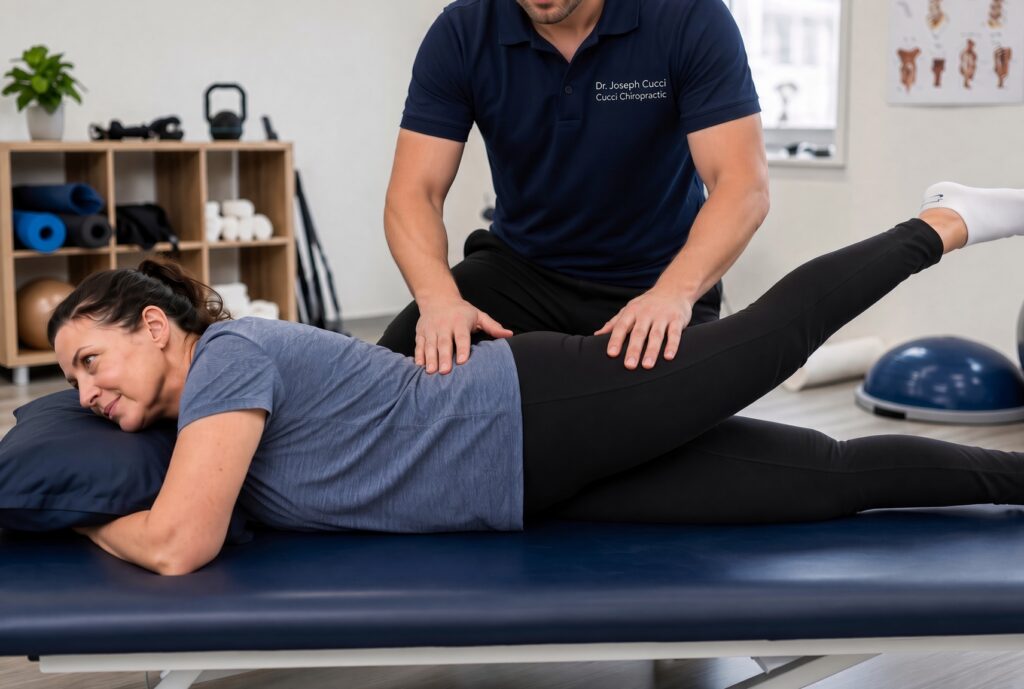
Most people improve with conservative care. Recent systematic reviews and network meta-analyses rank structured exercise among the most effective approaches for both pain relief and improved function. Education plus progressive loading of the gluteal tendons has shown stronger long-term results than corticosteroid injections alone in high-quality trials.
Here is a practical order of care:
1. Activity modification and simple measures Reduce the movements that flare the pain without stopping all activity. Ice can help in the early days. Over-the-counter anti-inflammatory medication may ease discomfort for short periods.
2. Targeted physical therapy and exercise This is the foundation for lasting improvement. Isometric holds progress to controlled strengthening and then to functional movements. The goal is to restore the capacity of the gluteal tendons so they can handle daily loads again. Many patients notice better night pain within a few weeks when they follow a well-designed program consistently.
3. Injections when needed Corticosteroid injections can provide faster short-term relief, especially when bursal irritation is prominent. Their benefit often fades over months if the underlying tendon issue is not addressed. Other options such as shockwave therapy are sometimes used as part of a broader plan.
4. Surgery in select cases Surgery is reserved for people who do not improve after many months of consistent conservative care and who have clear structural problems such as a significant tendon tear. It is not the first step for the vast majority of patients.
Recovery timelines vary. Many people feel meaningful improvement in 6–12 weeks with good adherence. Chronic cases can take longer, but steady progress is realistic.
Prevention and Long-Term Management
Once symptoms settle, the focus shifts to keeping them away. Maintain strength in the hips and core, manage training loads carefully if you are active, address any biomechanical issues, and stay at a healthy weight. Simple daily habits — standing up regularly, choosing supportive footwear, and avoiding prolonged side-lying on the painful hip — make a difference.
When Professional Care Makes the Difference?
Self-care and general advice help many people, but persistent outer hip pain deserves a precise evaluation. An accurate diagnosis, a customized loading program, and hands-on care often accelerate recovery and reduce the chance of the problem becoming chronic.
At Cucci Chiropractic, the team takes a whole-person approach to hip and musculoskeletal pain. With locations in New York and New Jersey, Dr. Joseph Cucci and the staff focus on identifying the structural and movement factors that keep symptoms lingering. Through careful assessment, chiropractic adjustments when appropriate, soft-tissue work, and guided rehabilitation, patients receive care aimed at restoring function rather than simply masking pain. For many dealing with hip bursitis or greater trochanteric pain syndrome, this combination of expertise and personalized attention has proven significant in helping them return to comfortable daily life and the activities they enjoy.
If outer hip pain is limiting your sleep, your walks, or your confidence in movement, you do not have to figure it out alone. The right information and the right support can change the trajectory.