
Living with pain can make everyday activities more challenging, whether you’re experiencing recent discomfort after an injury or symptoms that have gradually developed over time. At Cucci Chiropractic, our pain management consultations are designed to help you better understand your condition and explore conservative, non-surgical treatment options that may improve your comfort, mobility, and overall function.
Every patient experiences pain differently. The location, severity, duration, lifestyle, medical history, and daily demands all influence the most appropriate course of care. That’s why we begin with a comprehensive consultation rather than relying on a one-size-fits-all approach.
Our goal is to identify factors that may be contributing to your symptoms through a detailed history and physical examination. Based on your findings, we’ll develop an individualized care plan that reflects your needs, preferences, and overall health.
When appropriate, we also coordinate care with your primary care physician or other healthcare providers to help ensure you receive the most appropriate treatment for your condition.
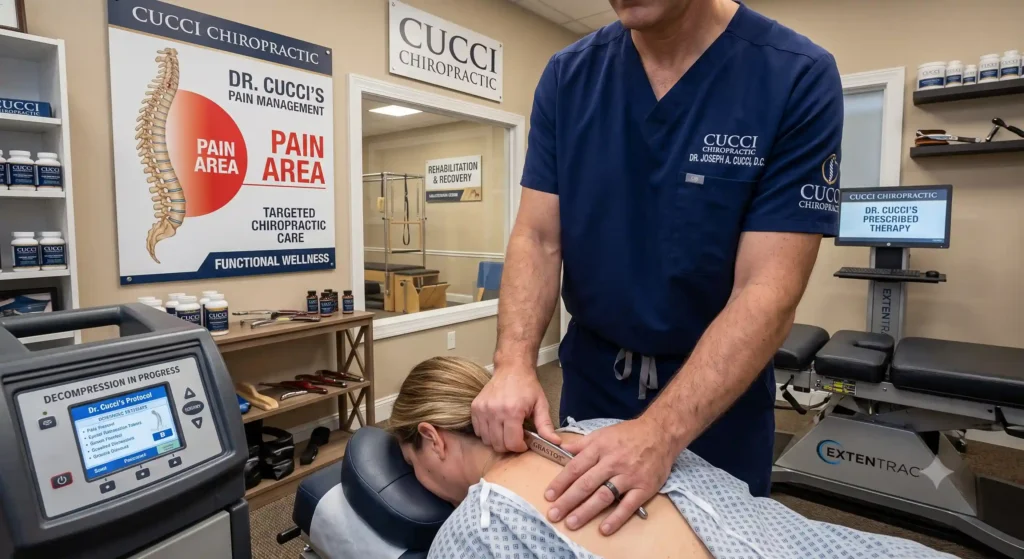
Book a consultation and we’ll assess whether Pain Management is right for you.
A pain management consultation is a comprehensive evaluation that helps us understand how your symptoms are affecting your daily life and physical function.
Rather than focusing solely on where pain is located, we evaluate how your body moves, how long you’ve been experiencing symptoms, and the factors that may be contributing to your discomfort.
Your consultation may include discussion of:
- Your current symptoms
- Previous injuries
- Medical history
- Daily activities
- Occupation
- Exercise habits
- Previous treatments
- Current medications
- Overall health goals
This information allows us to determine whether conservative chiropractic care may be appropriate or whether additional evaluation or referral to another healthcare provider should be considered.
When Should You Schedule a Consultation?
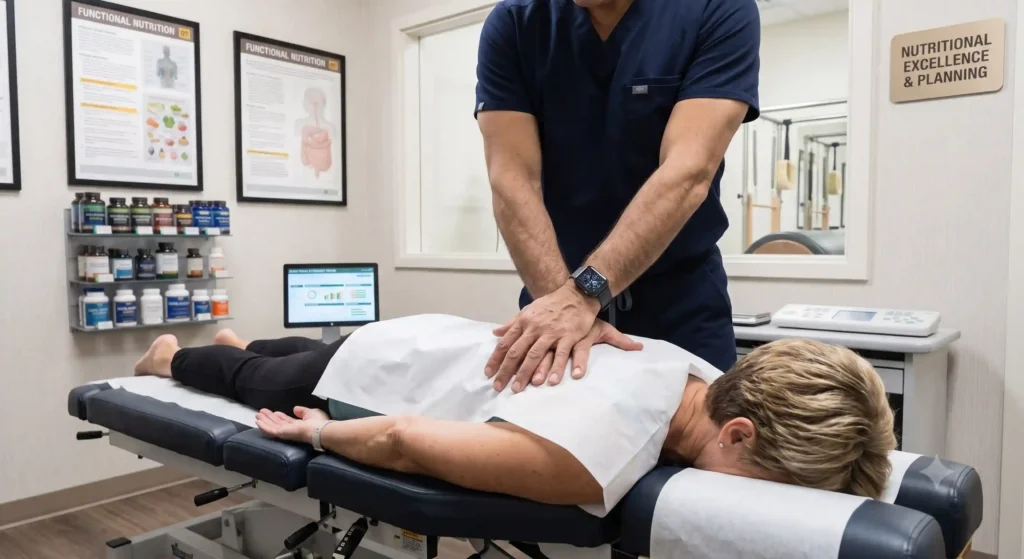
Pain can develop suddenly after an injury or gradually over time.
If discomfort begins affecting your ability to work, exercise, sleep, or participate in normal daily activities, it may be appropriate to schedule an evaluation.
Patients commonly seek a consultation for symptoms such as:
- Neck discomfort
- Back pain
- Joint pain
- Muscle tightness
- Reduced mobility
- Stiffness
- Sports-related injuries
- Repetitive strain injuries
- Postural discomfort
- Pain associated with everyday activities
Not every condition is appropriate for chiropractic care.
During your consultation, we’ll determine whether conservative treatment is suitable or whether referral for additional medical evaluation is recommended.
Conditions We Commonly Evaluate
Our consultations frequently involve musculoskeletal conditions affecting the spine and extremities.
Depending on your examination findings, we may evaluate concerns involving:
- Neck pain
- Mid-back discomfort
- Low back pain
- Sciatica symptoms
- Shoulder pain
- Hip discomfort
- Knee pain
- Foot and ankle complaints
- Muscle strains
- Ligament injuries
- Tendon irritation
- Joint stiffness
- Sports injuries
- Repetitive use injuries
Some patients also seek chiropractic evaluations for headaches that may be associated with musculoskeletal dysfunction. During your examination, we’ll determine whether your symptoms appear appropriate for conservative chiropractic management or require further medical assessment.
Understanding Your Pain
Pain is a complex experience that can be influenced by many physical, psychological, and lifestyle factors.
The location of pain doesn’t always identify its source, and similar conditions may affect different people in different ways.
Our evaluation considers multiple factors that may contribute to your symptoms, including:
- Joint mobility
- Muscle function
- Movement patterns
- Posture
- Previous injuries
- Daily activities
- Occupational demands
- Physical activity levels
By gathering this information, we can better understand how your symptoms affect your movement and daily function before discussing treatment recommendations.
Your Initial Examination
Your first visit begins with a detailed conversation about your health and your current concerns.
We’ll ask questions about:
- When your symptoms began
- What activities make them better or worse
- Previous treatments
- Past injuries
- Medical history
- Current medications
- Exercise habits
- Personal goals for care
This discussion is followed by a physical examination that may include assessment of:
- Posture
- Range of motion
- Joint mobility
- Muscle strength
- Flexibility
- Functional movement
- Orthopedic testing when appropriate
- Neurological screening when indicated
Every examination is individualized based on your symptoms and overall health history.
Our goal is to gather the information needed to make appropriate, patient-centered recommendations rather than rushing into treatment.
Diagnostic Imaging When Appropriate
Not every patient requires diagnostic imaging.
If your examination suggests that additional information is needed, we may recommend imaging studies consistent with current clinical guidelines.
Depending on your situation, this may include reviewing previous imaging or discussing whether new imaging should be obtained through the appropriate healthcare provider.
Imaging is only one part of the evaluation process and is considered alongside your medical history, symptoms, and physical examination findings.
When imaging is not clinically indicated, conservative treatment may begin without additional testing.
Conservative Treatment Options
Following your consultation and examination, we’ll discuss treatment options that are appropriate for your condition and based on your individual findings.
Not every patient requires the same type or frequency of care. Your recommendations will depend on factors such as your symptoms, examination findings, medical history, activity level, and personal goals.
Depending on your needs, your care plan may include one or more conservative treatment approaches, including:
- Chiropractic adjustments
- Manual therapy
- Soft tissue techniques
- Therapeutic exercises
- Stretching and mobility programs
- Postural education
- Ergonomic recommendations
- Home exercise instruction
- Lifestyle guidance
Our objective is to help improve movement, support musculoskeletal function, and provide practical strategies that fit your daily routine.
If we determine that your condition falls outside the scope of chiropractic care or requires additional medical evaluation, we’ll discuss appropriate referral options.
Chiropractic Care as Part of Pain Management
Chiropractic care focuses on evaluating and managing conditions affecting the musculoskeletal system, particularly those involving the spine and joints.
When clinically appropriate, chiropractic adjustments may be recommended to help improve joint mobility and support normal movement.
Treatment recommendations are individualized and based on your examination findings rather than your diagnosis alone.
Throughout your care, we’ll regularly reassess your progress and modify your treatment plan as your condition changes.
Our approach emphasizes conservative care that aligns with current clinical practice guidelines and your personal goals.
Manual Therapy and Soft Tissue Care
In addition to chiropractic adjustments, some patients may benefit from manual therapy techniques designed to address muscles and other soft tissues.
Depending on your condition, treatment may include techniques intended to:
- Improve soft tissue mobility
- Address muscle tension
- Support joint movement
- Improve flexibility
- Complement rehabilitation exercises
Manual therapy is selected based on your individual examination and comfort level.
We explain each recommended technique before treatment so you understand how it fits into your overall care plan.
Therapeutic Exercise and Rehabilitation
Movement plays an important role in maintaining musculoskeletal health.
For many patients, treatment extends beyond in-office care.
Depending on your condition, we may recommend therapeutic exercises that are designed to support strength, flexibility, balance, and functional movement.
Your rehabilitation program may include:
- Stretching exercises
- Mobility exercises
- Core stabilization
- Balance training
- Functional movement activities
- Strengthening exercises
- Home exercise instruction
Each exercise program is tailored to your current abilities and adjusted as your condition changes.
We encourage gradual progression rather than pushing through pain or attempting advanced exercises too early.
Lifestyle and Activity Recommendations
Daily habits can influence how your body responds to physical stress.
During your consultation, we may discuss practical strategies that help support your overall musculoskeletal health.
Topics may include:
- Workplace ergonomics
- Sitting and standing posture
- Lifting techniques
- Physical activity
- Exercise habits
- Sleep position
- Stress management
- General wellness habits
These recommendations are individualized and intended to complement—not replace—your treatment plan.
Small adjustments to everyday activities may help reduce unnecessary strain on muscles and joints while supporting long-term health.
Patient Education and Shared Decision-Making
We believe patients should understand their condition and participate in decisions about their care.
Throughout your consultation, we’ll explain:
- Our examination findings
- Factors that may be contributing to your symptoms
- Available conservative treatment options
- Expected goals of care
- When additional evaluation may be appropriate
We encourage questions and want you to feel informed before beginning treatment.
Our recommendations are made collaboratively, taking into account your preferences, lifestyle, and health goals.
Rather than focusing only on symptom management, we aim to help patients better understand their musculoskeletal health and make informed decisions about their care.
Monitoring Your Progress
Recovery looks different for every patient.
Some conditions improve relatively quickly, while others may require longer periods of conservative management.
Throughout your care, we’ll periodically reassess your progress by evaluating factors such as:
- Changes in symptoms
- Range of motion
- Functional movement
- Daily activity tolerance
- Personal goals
- Response to treatment
These follow-up evaluations help us determine whether your current care plan remains appropriate or whether modifications should be considered.
If your symptoms are not progressing as expected or new concerns develop, we may recommend additional evaluation or referral to another healthcare professional.
Our priority is ensuring that your care continues to reflect your current needs and aligns with evidence-informed clinical decision-making.
Schedule Your Pain Management Consultation Today!
If pain is affecting your daily activities, work, exercise, or overall quality of life, a comprehensive evaluation can help determine whether conservative chiropractic care may be appropriate for your needs.
At Cucci Chiropractic, we’ll begin by carefully reviewing your health history, discussing your symptoms, and performing a thorough musculoskeletal examination. Based on our findings, we’ll explain your condition, answer your questions, and recommend an individualized care plan designed around your goals and current clinical needs.
Whether you’re experiencing recent discomfort, recurring musculoskeletal pain, or limited mobility, our team is committed to providing thoughtful, patient-centered care in a supportive environment.