Recovering from an injury involves more than simply waiting for pain to improve. Whether you’re healing after a sports injury, recovering from surgery, or returning to activity following weeks of discomfort, rebuilding strength, balance, flexibility, and movement quality is an important part of the recovery process.
At Cucci Chiropractic, we believe rehabilitation should be individualized because no two injuries—or patients—are exactly alike.
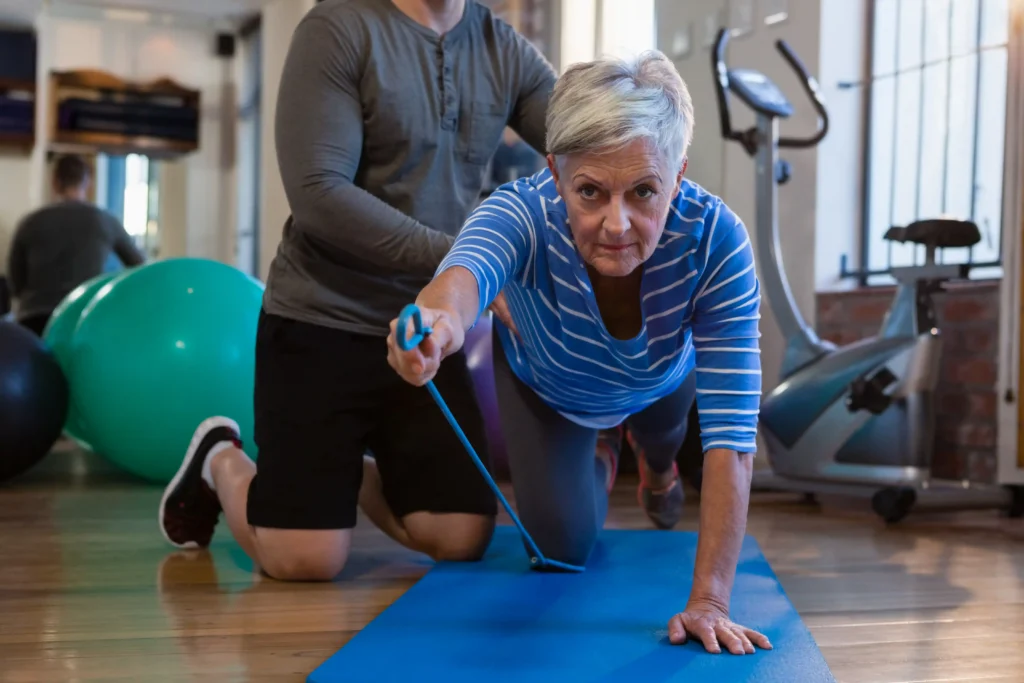
Performance rehabilitation exercise is designed to help restore functional movement through a structured program that progresses according to your condition, goals, and response to care. Rather than focusing only on the area that hurts, we evaluate how your entire body moves to identify movement patterns that may be contributing to discomfort or limiting recovery.
Every rehabilitation program begins with a comprehensive assessment.
We want to understand your symptoms, previous injuries, daily activities, work demands, exercise habits, and personal goals before recommending treatment.
Whether your goal is returning to competitive sports, recreational exercise, physically demanding work, or simply moving more comfortably during everyday activities, we’ll develop a rehabilitation plan that’s appropriate for your individual needs.
Book a consultation and we’ll assess whether Performance Rehabilitation Exercise is right for you.
Performance rehabilitation exercise is a structured approach to improving movement, strength, flexibility, balance, coordination, and overall physical function after injury or periods of reduced activity.
Unlike a generic exercise program, rehabilitation focuses on helping you safely progress through each stage of recovery based on your individual condition.
Depending on your examination findings, your rehabilitation program may include:
- Functional strengthening exercises
- Mobility training
- Balance and coordination exercises
- Core stabilization
- Neuromuscular re-education
- Flexibility training
- Progressive resistance exercises
- Sport- or activity-specific movement training
- Home exercise recommendations
Every recommendation serves a specific purpose.
Rather than asking every patient to complete the same exercises, we build your program around your current abilities and gradually increase difficulty as your condition improves.
Our goal is to help you move more confidently while supporting long-term function and physical activity.
Who Can Benefit From Performance Rehabilitation?
Performance rehabilitation isn’t limited to competitive athletes.
Many different patients benefit from structured rehabilitation programs, including individuals recovering from:
- Sports injuries
- Muscle strains
- Ligament injuries
- Tendon irritation
- Joint injuries
- Overuse conditions
- Chiropractic-related movement dysfunction
- Post-surgical rehabilitation (when appropriate)
- Balance concerns
- General deconditioning following injury
You don’t need to participate in organized sports to benefit from rehabilitation.
Many of our patients simply want to:
- Walk without discomfort
- Return to work
- Resume exercise
- Lift their children or grandchildren
- Enjoy hiking or recreational activities
- Improve balance and stability
- Feel more confident during everyday movement
Your goals help guide your rehabilitation program.
Our Approach to Performance Rehabilitation
At Cucci Chiropractic, we don’t believe rehabilitation should begin with exercises alone.
Instead, we begin by understanding how your body moves.
During your evaluation, we may assess:
- Joint mobility
- Muscle strength
- Flexibility
- Balance
- Coordination
- Walking pattern
- Functional movement
- Posture
- Previous injuries
- Current symptoms
These findings help us identify movement limitations that may be contributing to your discomfort or limiting your recovery.
Rather than simply treating painful areas, we evaluate how different regions of your body work together during movement.
This comprehensive approach allows us to develop rehabilitation strategies that reflect your individual needs rather than following a standard protocol.
Common Conditions We Evaluate
Patients seek performance rehabilitation for many different reasons.
Some are recovering from an injury.
Others are trying to regain strength after surgery or a period of inactivity.
Depending on your examination findings, rehabilitation may be appropriate for patients experiencing:
- Sports-related injuries
- Shoulder discomfort
- Knee injuries
- Hip pain
- Ankle injuries
- Lower back pain
- Neck pain
- Muscle weakness
- Reduced flexibility
- Balance deficits
- Coordination challenges
- Movement limitations following chiropractic care
A diagnosis alone doesn’t determine your rehabilitation program.
Two patients with the same injury may require completely different treatment approaches depending on their symptoms, goals, activity level, and physical examination.
That’s why every rehabilitation plan is personalized.
Why Progressive Rehabilitation Matters?
Returning to full activity too quickly can sometimes delay recovery or increase discomfort.
On the other hand, avoiding movement altogether may contribute to muscle weakness, stiffness, and reduced confidence during physical activity.
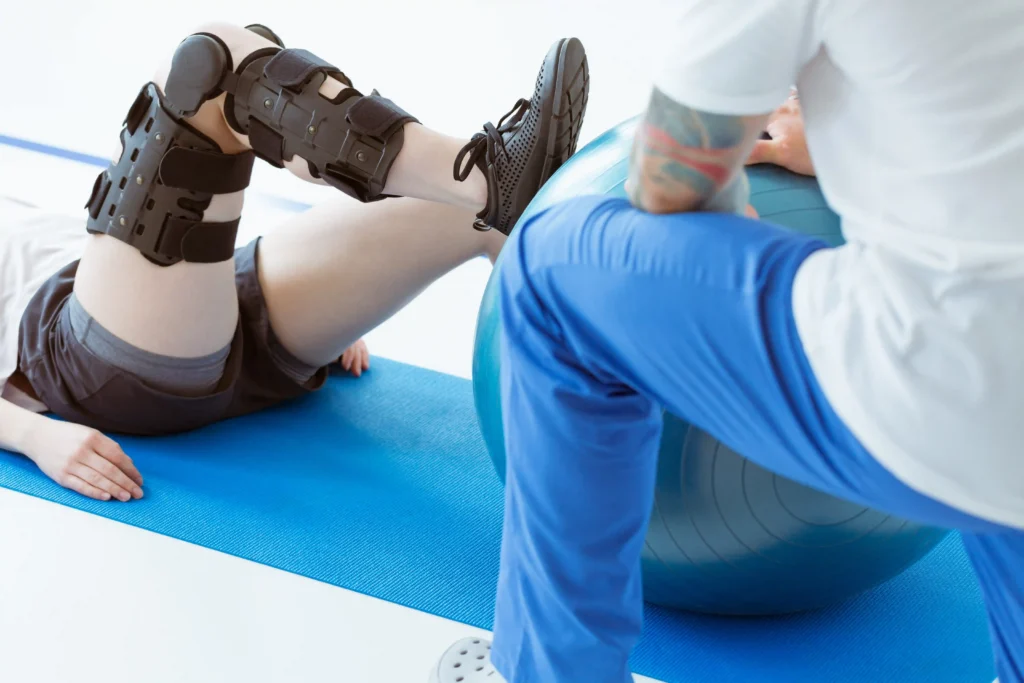
Performance rehabilitation is designed to provide gradual progression.
As your body adapts, exercises become more challenging while remaining appropriate for your current level of function.
Throughout your care, we continue to monitor your progress and modify your program based on how you’re responding.
Recovery isn’t always a straight line.
Some patients progress rapidly.
Others require additional time depending on the nature of their condition.
Our role is to guide you safely through that process while helping you build strength, confidence, and movement quality over time.
Building Strength for Everyday Movement
Strength is one of the foundations of successful rehabilitation. After an injury or a period of reduced activity, muscles may become weaker, coordination may decline, and everyday movements can feel more difficult than they once did.
Our rehabilitation programs focus on rebuilding strength gradually and safely.
Rather than asking you to perform high-intensity exercises immediately, we begin with movements that match your current level of function and progressively increase the challenge as your body adapts.
Depending on your condition, your program may include exercises designed to improve:
- Core stability
- Hip strength
- Shoulder function
- Leg strength
- Upper body endurance
- Functional lifting mechanics
- Body control during movement
Every exercise has a purpose.
We want each movement to help you regain confidence while supporting your long-term recovery goals.
Balance and Coordination Training
Balance involves much more than simply standing on one foot.
It requires your muscles, joints, eyes, inner ear, and nervous system to work together continuously.
Following an injury, surgery, or period of inactivity, balance may become less efficient.
You may notice:
- Feeling less stable while walking
- Difficulty changing direction
- Reduced confidence on uneven surfaces
- Slower reaction times
- Increased fatigue during physical activity
During your rehabilitation program, we may incorporate balance exercises appropriate for your condition.
Depending on your progress, these exercises may include:
- Single-leg balance activities
- Controlled stepping exercises
- Functional reaching movements
- Stability training
- Dynamic balance activities
- Core activation exercises
Our objective isn’t simply improving balance during therapy.
We want to help you feel more confident during everyday activities such as walking, climbing stairs, exercising, or participating in recreational activities.
Neuromuscular Re-Education
Following an injury, your muscles and nervous system may not communicate as efficiently as they did before.
Even after tissues begin healing, movement patterns sometimes remain altered.
Neuromuscular re-education focuses on improving how your brain and muscles work together during movement.
This may include exercises that encourage:
- Improved movement awareness
- Better muscle activation
- Enhanced coordination
- Postural control
- Functional movement patterns
- Joint stability
Rather than strengthening muscles alone, these exercises help reinforce efficient movement during everyday activities.
For many patients, neuromuscular training becomes an important part of rebuilding confidence after injury.
Mobility and Flexibility Exercises
Healthy movement requires both strength and mobility.
When joints or surrounding muscles become stiff, everyday tasks may require greater effort than they should.
Depending on your examination findings, your rehabilitation program may include exercises designed to improve:
- Joint mobility
- Muscle flexibility
- Functional range of motion
- Controlled movement
- Soft tissue mobility
- Postural movement
Mobility exercises are introduced gradually and modified according to your comfort level.
We don’t force movement beyond what your body is prepared to tolerate.
Instead, we encourage steady progress while monitoring how your body responds throughout rehabilitation.
Functional Movement Training
One of the most important goals of rehabilitation is helping you perform the activities that matter most to you.
That’s why many rehabilitation exercises are based on real-life movement rather than isolated muscle exercises alone.
Depending on your goals, functional training may include movements that simulate:
- Walking
- Squatting
- Reaching
- Lifting
- Carrying
- Pushing
- Pulling
- Climbing stairs
- Changing direction
- Returning to recreational activities
If you’re an athlete, your exercises may gradually progress toward sport-specific movement.
If your goal is returning to work, we focus on movements that reflect your occupational demands.
Every rehabilitation plan is built around your individual lifestyle rather than a generic exercise routine.
Manual Therapy as Part of Rehabilitation
Exercise is often one component of rehabilitation, but some patients may also benefit from hands-on treatment.
Depending on your examination findings, we may incorporate manual therapy into your rehabilitation program.
Manual therapy may include:
- Soft tissue techniques
- Joint mobilization
- Myofascial release
- Instrument-Assisted Soft Tissue Mobilization (IASTM)
- Stretching techniques
- Chiropractic adjustments when appropriate
Our goal is to improve comfort and movement so you can participate more effectively in your rehabilitation exercises.
We continually reassess your response and modify treatment based on your progress.
How Chiropractic Care Complements Rehabilitation?
Chiropractic care and rehabilitation often work well together because they address different aspects of movement.
While rehabilitation focuses on improving strength, mobility, coordination, and function, chiropractic care may be used to address joint movement and musculoskeletal function when clinically appropriate.
For some patients, combining these approaches creates a more comprehensive treatment plan.
Depending on your needs, your care may include:
- Chiropractic adjustments
- Performance rehabilitation exercises
- Manual therapy
- Kinesiology taping
- Neuromuscular re-education
- Foot orthotics when appropriate
- Balance training
- Home exercise instruction
We don’t automatically recommend every treatment.
Each recommendation is based on your examination findings and recovery goals.
What to Expect During Your First Performance Rehabilitation Appointment?
Your first appointment begins with a conversation about your health, symptoms, and goals.
We want to understand how your condition affects your daily life before developing a rehabilitation program.
During your evaluation, we may discuss:
- Your current symptoms
- Previous injuries
- Surgical history
- Exercise habits
- Work demands
- Recreational activities
- Short-term recovery goals
- Long-term activity goals
Next, we perform a physical examination that may include:
- Range of motion testing
- Strength assessment
- Balance evaluation
- Functional movement assessment
- Walking analysis
- Flexibility testing
- Postural evaluation
Based on these findings, we’ll explain our recommendations and begin developing a rehabilitation program tailored to your individual needs.
Some patients begin exercises during their first visit, while others first require treatment to improve comfort before progressing into rehabilitation.
Every plan is individualized.
Why Choose Cucci Chiropractic?
At Cucci Chiropractic, we believe rehabilitation should be personalized—not standardized.
We don’t hand every patient the same exercise sheet.
Instead, we begin with a comprehensive evaluation to understand how your body moves, what your goals are, and which areas may be limiting your recovery.
Our approach emphasizes:
- Individualized rehabilitation programs
- One-on-one patient care
- Progressive exercise prescription
- Functional movement assessment
- Conservative chiropractic care
- Evidence-informed clinical decision-making
- Ongoing progress evaluations
- Clear communication throughout your recovery
Whether you’re recovering from an injury, returning to sports, or simply trying to move more comfortably, we work with you to develop a program that reflects your needs and lifestyle.
If your rehabilitation plan needs to change as you improve, we’ll adjust it accordingly.
Our goal is to help you build strength, confidence, and movement quality while supporting your long-term health.
Schedule Your Performance Rehabilitation Consultation Today!
If pain, weakness, reduced mobility, or a recent injury is preventing you from enjoying the activities that matter most, we’re here to help.
At Cucci Chiropractic, we begin with a thorough evaluation to understand your symptoms, movement patterns, and recovery goals.
We’ll explain our findings, answer your questions, and develop a personalized rehabilitation program designed specifically for you.
Whether your goal is returning to sports, recovering from surgery, improving balance, or moving more comfortably during everyday activities, we’ll work with you every step of the way.