
Living with chronic headaches, neck pain, dizziness, or balance problems can make even simple daily activities feel overwhelming. Many people spend months—or even years—trying medications, physical therapy, massage, or other treatments without finding lasting relief because those treatments often focus on managing symptoms rather than identifying what may be contributing to them.
At Cucci Chiropractic, we take a different approach.
We begin by evaluating the relationship between your upper cervical spine, your posture, and the way your body moves as a whole. One of the most important structures we examine is the Atlas (C1), the top vertebra in your neck. This small bone supports your head, protects the brainstem, and plays an important role in maintaining proper alignment throughout the spine.
When appropriate, we use the Atlas Orthogonal technique to make gentle, instrument-assisted corrections based on detailed imaging and a thorough examination. The adjustment does not involve forceful twisting, cracking, or manual manipulation of the neck. Instead, we use precise measurements to guide every correction, allowing us to provide individualized care that’s both comfortable and highly specific.
Every patient receives a comprehensive evaluation before treatment begins. Our goal is to understand what’s contributing to your symptoms and determine whether upper cervical care is appropriate for your individual needs.

Book a consultation and we’ll assess whether Upper Cervical is right for you.
Atlas Orthogonal is a specialized form of upper cervical chiropractic care that focuses on the precise alignment of the Atlas (C1) vertebra.
Unlike traditional chiropractic techniques that may involve adjusting several areas of the spine, Atlas Orthogonal concentrates on the upper cervical region because of its unique role in supporting the head and protecting the brainstem.
The Atlas is unlike any other vertebra in your body. It balances the weight of your head while allowing you to turn, rotate, and move your neck freely. Because it sits at the top of the spinal column, even subtle changes in its position may influence posture, muscle balance, and the way forces are distributed throughout the body.
Before recommending any treatment, we perform a detailed examination along with advanced digital imaging to determine the exact position of your Atlas. Those measurements allow us to create a personalized correction that is specific to your anatomy rather than relying on generalized adjustments.
This precision is one of the defining features of Atlas Orthogonal care.
How Atlas Orthogonal Is Different?
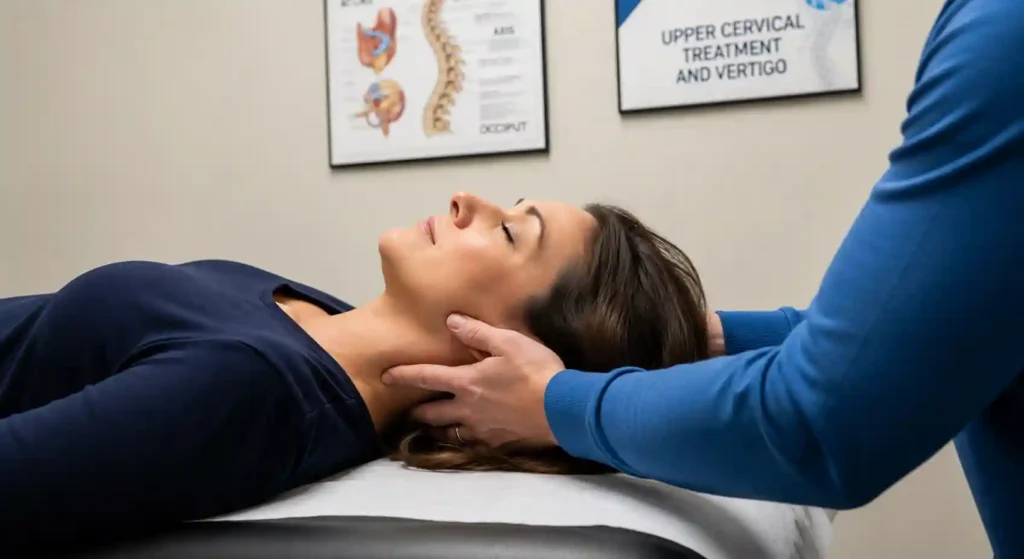
Many people associate chiropractic care with forceful spinal manipulation or the sound of joints popping. Atlas Orthogonal is designed differently.
Instead of manually rotating your neck, we use a precision instrument that delivers a gentle mechanical impulse based on measurements obtained during your imaging study.
Because the correction is carefully calculated for your individual alignment, there is no need for forceful twisting or sudden movements.
Patients often tell us they are surprised by how gentle the adjustment feels.
Our goal is not simply to perform an adjustment. Our goal is to make the most accurate correction possible based on objective findings from your examination and imaging.
That focus on precision allows us to provide care that is individualized for every patient.
Why the Upper Cervical Spine Matters?
Your upper cervical spine serves as the foundation for the rest of your spinal alignment.
When the Atlas is functioning normally, your head, neck, and spine work together to support efficient movement and healthy posture.
If movement in this area becomes restricted or the alignment changes, your body may begin to compensate. Those compensations can sometimes contribute to muscle tension, postural changes, reduced mobility, or discomfort in other parts of the body.
Because every patient is unique, we never assume that the Atlas is the source of a problem.
Instead, we perform a comprehensive evaluation to determine whether upper cervical dysfunction may be contributing to your symptoms.
If we believe Atlas Orthogonal care is appropriate, we’ll explain why and discuss how it fits into your personalized treatment plan.
If another approach is more appropriate, we’ll discuss that as well.
Conditions We Commonly Evaluate
Patients visit Cucci Chiropractic with a wide variety of concerns. While every condition requires an individual evaluation, upper cervical care may be considered as part of a treatment plan for patients experiencing:
- Headaches
- Migraines
- Neck pain
- Neck stiffness
- Dizziness
- Vertigo
- Whiplash-related discomfort
- Postural problems
- Shoulder tension
- Chronic muscle tightness
- Certain balance-related complaints
Rather than treating a diagnosis alone, we evaluate how your joints, muscles, posture, and movement patterns work together before making treatment recommendations.
Our Approach to Care
No two patients receive the same treatment plan.
Your care begins with listening.
We’ll discuss your health history, your current symptoms, previous injuries, imaging studies, lifestyle, and your treatment goals.
Next, we perform a thorough physical examination to evaluate posture, spinal mobility, joint movement, muscle balance, and functional movement.
If appropriate, advanced digital imaging is used to analyze the precise alignment of your upper cervical spine.
Only after reviewing all of this information do we determine whether Atlas Orthogonal care is appropriate.
That means every recommendation is based on objective findings—not assumptions.
Why Patients Choose Cucci Chiropractic?
Choosing a chiropractor is about more than selecting a treatment technique.
Patients choose Cucci Chiropractic because they value individualized care, honest recommendations, and a thoughtful approach to treatment.
When you visit our office, you’ll work directly with Dr. Joseph Cucci throughout your care.
Every consultation, examination, adjustment, and progress evaluation is performed personally, allowing us to monitor your progress consistently and make treatment decisions based on how you’re responding over time.
We believe patients deserve clear explanations, realistic expectations, and treatment recommendations that are based on their individual needs rather than a one-size-fits-all approach.
Whether your symptoms are recent or something you’ve been managing for years, our goal is to help you better understand your condition and determine the most appropriate path forward.
What to Expect During Your First Visit?
Your first appointment at Cucci Chiropractic is focused on understanding your health concerns—not rushing you through an adjustment. We believe the best care starts with listening, asking the right questions, and performing a thorough evaluation before recommending any treatment.
Comprehensive Consultation
We’ll begin by discussing your symptoms, health history, previous injuries, lifestyle, and any treatments you’ve already tried. We’ll also talk about your goals, whether you’re hoping to reduce pain, improve mobility, return to an active lifestyle, or simply feel more comfortable throughout your day.
This conversation helps us understand how your symptoms affect your daily life and provides valuable information that guides the rest of your examination.
Physical Examination
Next, we’ll perform a detailed examination to evaluate how your body moves and functions. Depending on your condition, this may include:
- Postural assessment
- Range of motion testing
- Neurological screening
- Orthopedic testing
- Spinal mobility evaluation
- Muscle balance assessment
- Gait and movement analysis
Rather than focusing only on where you feel pain, we look at how your entire body works together. In many cases, the area causing discomfort isn’t necessarily the source of the problem.